What Is E-Stim?
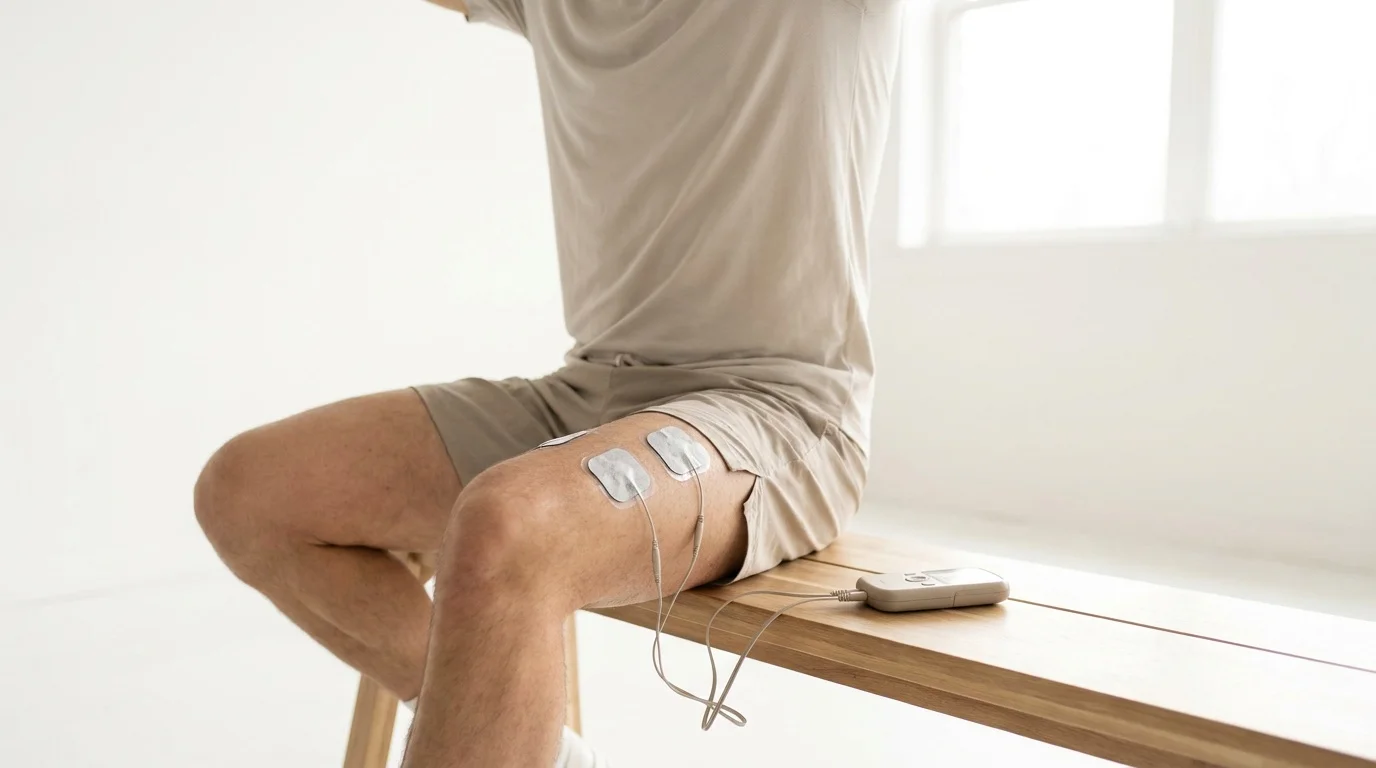
Electrical stimulation, or e-stim, is a term for a type of technology that applies an electrical current to your body.
Depending on the type of device and the settings selected, e-stim can be used to ease pain, make muscles contract, or help a muscle that has shut down after an injury come back online.
At low settings, e-stim feels like a gentle tingling or buzz on the skin. As the intensity increases, the feeling grows into a louder buzz and eventually a strong muscle contraction.
I have been helping athletes to optimize recovery from injuries and surgery using e-stim for nearly 10 years. In this article, I’ll share a few of my experiences with you. I’ll also break down the different types of e-stim, what each one is good for, and what we use at Embodi³.
The Types of E-Stim and Their Benefits
There are three main types of e-stim, listed below:
TENS: Temporary Pain Relief
Transcutaneous Electrical Nerve Stimulation sends a light buzzing signal to the nerves responsible for sending pain signals. By doing so, it numbs these receptors, providing the benefit of pain relief.
While TENS can be a useful tool for temporary pain relief, it does not work to correct the underlying cause of the pain. You can think of it more like a band aid, rather than a solution.
EMS or NMES: Muscle Activation and Strength
Electrical Muscle Stimulation, also called Neuromuscular Electrical Stimulation, targets the motor nerves to make the muscles contract. The research around EMS and NMES points to three clear benefits:
It helps wake muscles up after surgery. A review of 11 randomized trials of people after ACL surgery found that adding NMES to standard physical therapy improved quad strength and physical function more than physical therapy alone in the early weeks after surgery, from 4 to 12 weeks [1].
It helps maintain muscle size during periods of inactivity. In a study where 24 healthy young men had one knee immobilized for 5 days, the group without e-stim lost 3.5% of their quad size, while the group receiving two 40-minute sessions a day kept theirs [2]. Strength still dropped in both groups, 9% without e-stim and 7% with it [2], so keeping size is not the same as keeping strength.
It can help athletes to build strength. A review of 89 e-stim strength training trials, focused on trained and elite athletes, found that strength gains were linked to stimulation strong enough to drive the muscle to 50% or more of a full-effort contraction [3].
Direct Current E-Stim: Improving Muscle Performance & Re-building Mind Muscle Connection
In electrical terms, there are two types of current.
Alternating current, which flips back and forth between polarities.
And direct current, which maintains a constant polarity (our body naturally communicates with direct current).
While most TENS, EMS, and NMES e-stim units use alternating current, a select few devices utilize a pulsed direct current electrical stimulation.
These devices are a gamechanger when it comes to the world of e-stim. A study conducted by one of the device manufacturers indicated that quad size grew 3x more efficiently after ACL surgery by combining a direct current e-stim device with exercise.
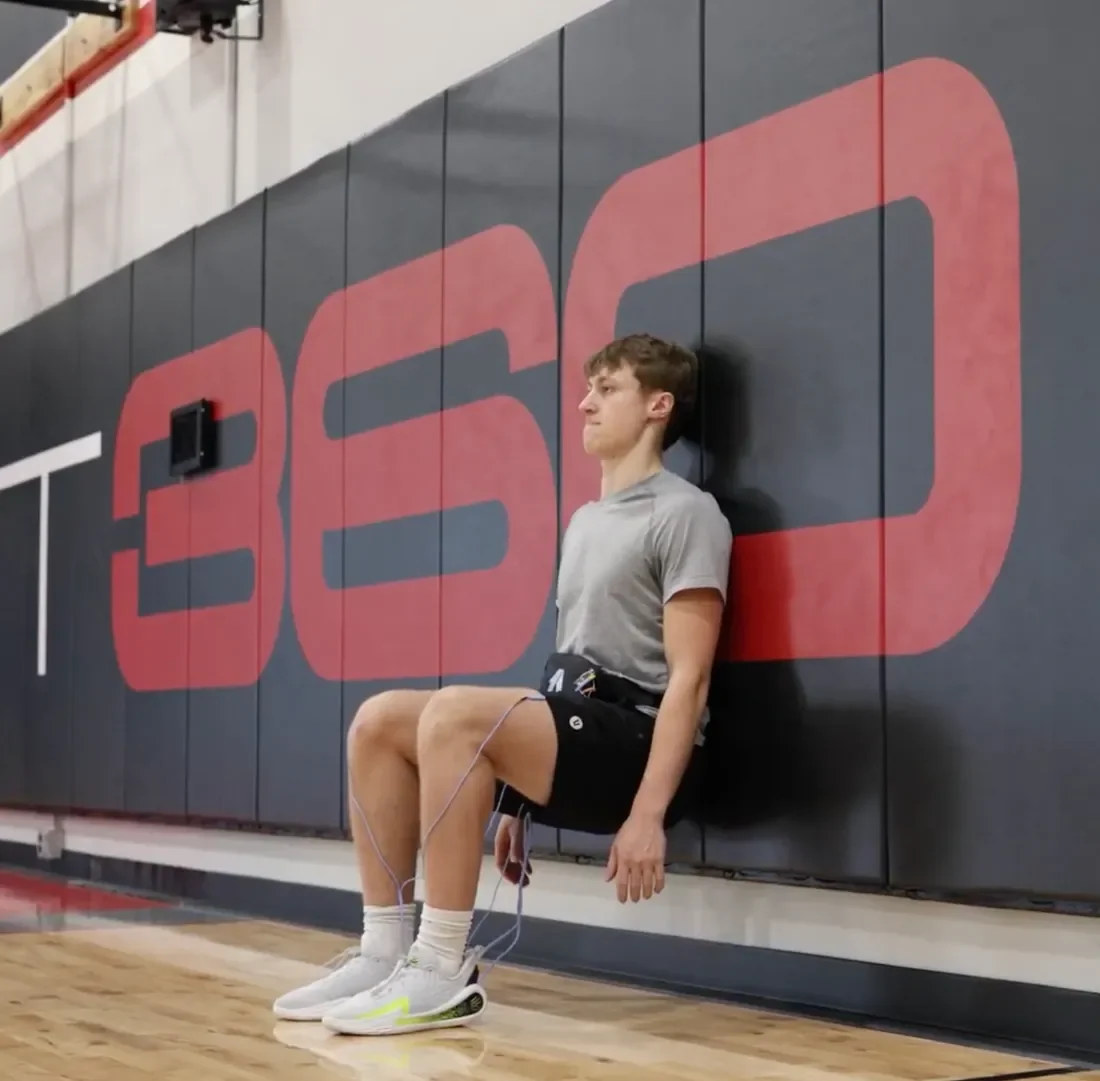
While alternating current devices are generally applied in a passive position (lying on a table or sitting down), direct current e-stim devices can be combined with movement at higher levels of stimulation.
This combination allows for improved muscle performance and a more efficient way to re-build the mind muscle connection after injuries and surgery.
For a deeper comparison, see our breakdown of TENS vs EMS and which one builds muscle, or our guide to choosing a home NMES unit.
What We Use at Embodi³ and Why
At Embodi³, we use direct current e-stim. Direct current e-stim allows us to go to high levels of intensity while executing specific movement patterns. The combination is designed to activate muscles, improve range of motion, and more efficiently rebuild the mind-muscle connection.
That matters because muscles have two jobs: they create force, and they absorb force. Muscles are the shock absorbers that protect your tendons, ligaments, and joints. When a joint gets hurt, the brain often pulls the surrounding muscles offline to protect the area, a response called muscle guarding. If it lingers, the shock absorbers stay switched off, and stress lands on the very tissues trying to heal, delaying the healing process.
(If you are experiencing this phenomenon after an ACL injury, you might be interested in this article: Why your quad won't turn on after ACL surgery.)
Every session follows the same arc:
Assess. Through specific movement protocols and work with a direct current e-stim device, we determine the most beneficial areas to apply the e-stim for your recovery.
Activate. We stimulate the areas identified while coaching you through a very specific movement pattern. The movement pattern is designed to ensure that your brain learns to activate the correct muscles during movement.
Accelerate. By combining the stimulation with an active range of motion movements, we often find progress from injury and surgery to be accelerated.
I truly believe the body is strong, resilient, and designed to repair itself. Direct current e-stim helps us to tap into the body’s natural healing processes and optimize them for success.
A Direct Current E-Stim Case Study
A few years ago, a high school softball player, CJ, came to me approximately 2 months post-op ACL reconstruction surgery. Her parents were concerned that she would not be able to make it back for her softball season, just 2.5 months away.
While most doctors recommend that athletes sit out for 9-12 months after an ACL reconstruction surgery, there are a few out there who will clear athletes for return to sport based on function. The hope was that CJ could improve strength, mobility, and function to the point that she could make it back to softball by the 4.5 month post-op mark.
It was an important season for CJ and the team had a legitimate chance to make a state title run.
After several months of working with me and direct current e-stim, CJ was cleared for return to sport, just 4.5 months post-op. She and her team went on to win the state title that year - an opportunity she may have missed out on otherwise.
You can watch more of her story and her thoughts on the Embodi³ program here.

Work With Us at Embodi³
Whether you are in our ACL recovery program, recently injured, or have been struggling to have your body feel at its best, direct current e-stim coaching at Embodi³ can help.
I coach one-on-one in person in Baltimore, Maryland, and work remotely with athletes throughout the US. For remote clients, we ship the device to your home and set up one-on-one video calls to guide you through your workouts. If you want to see whether this fits your training or recovery, email me directly at zach@embodi3sports.com or schedule a free 15-minute call.
Schedule a 15 Minute Call with Zach
Disclaimer: This article is for general information only. It is not a medical evaluation and does not replace an exam with your doctor or physical therapist. Your surgeon and physical therapist make all medical calls regarding your care. Embodi³ is a coaching program, not medical care. Talk with your surgeon and your physical therapist before you start a new exercise or device.
Sources
Hauger AV, Reiman MP, Bjordal JM, Sheets C, Ledbetter L, Goode AP. Neuromuscular electrical stimulation is effective in strengthening the quadriceps muscle after anterior cruciate ligament surgery. Knee Surgery, Sports Traumatology, Arthroscopy, 2018;26(2):399-410. https://pubmed.ncbi.nlm.nih.gov/28819679/
Dirks ML, Wall BT, Snijders T, Ottenbros CL, Verdijk LB, van Loon LJ. Neuromuscular electrical stimulation prevents muscle disuse atrophy during leg immobilization in humans. Acta Physiologica, 2014;210(3):628-641. https://pubmed.ncbi.nlm.nih.gov/24251881/
Filipovic A, Kleinöder H, Dörmann U, Mester J. Electromyostimulation: a systematic review of the influence of training regimens and stimulation parameters on effectiveness in electromyostimulation training of selected strength parameters. Journal of Strength and Conditioning Research, 2011;25(11):3218-3238. https://pubmed.ncbi.nlm.nih.gov/21993042/
Cleveland Clinic. Transcutaneous Electrical Nerve Stimulation (TENS). https://my.clevelandclinic.org/health/treatments/15840-transcutaneous-electrical-nerve-stimulation-tens