What Does an EMS Workout Feel Like?
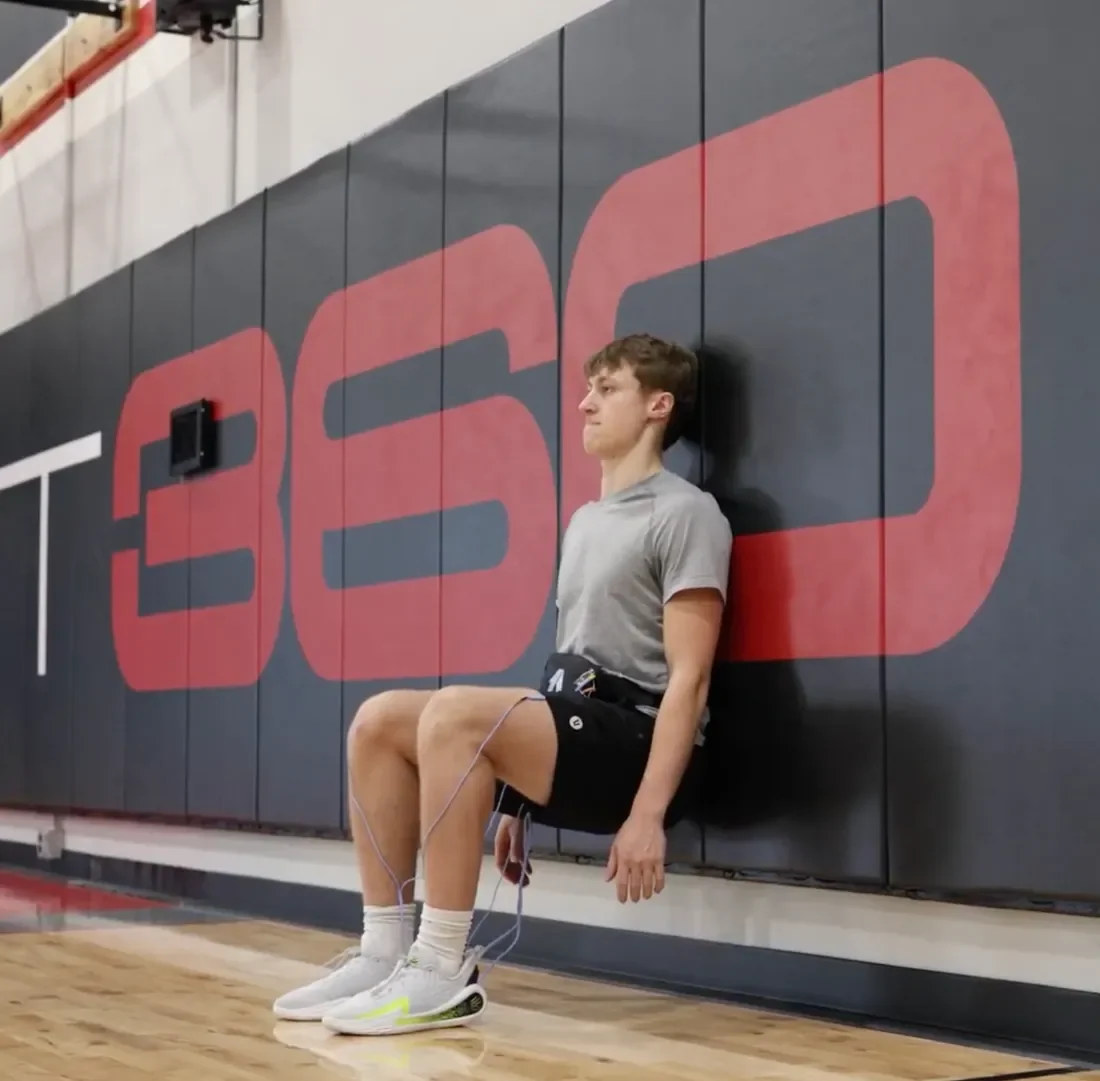
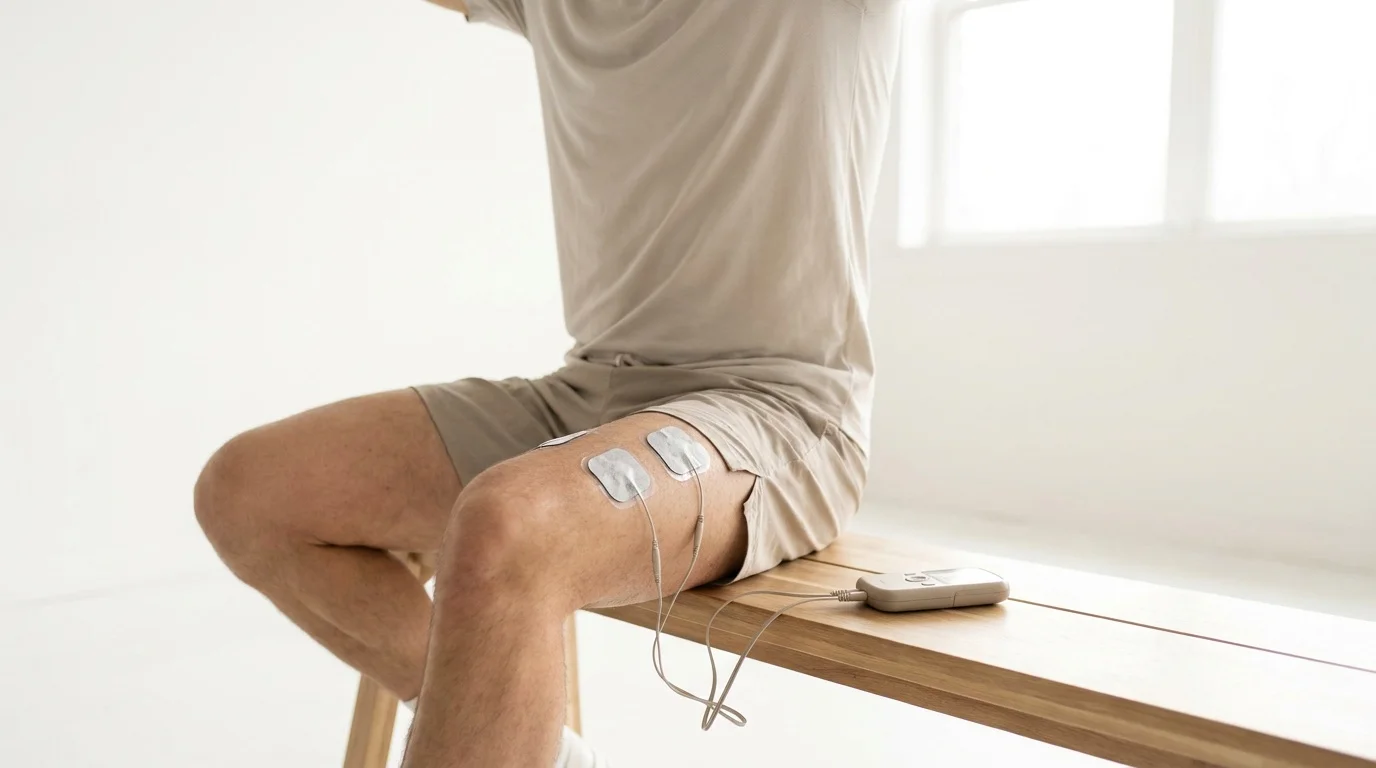
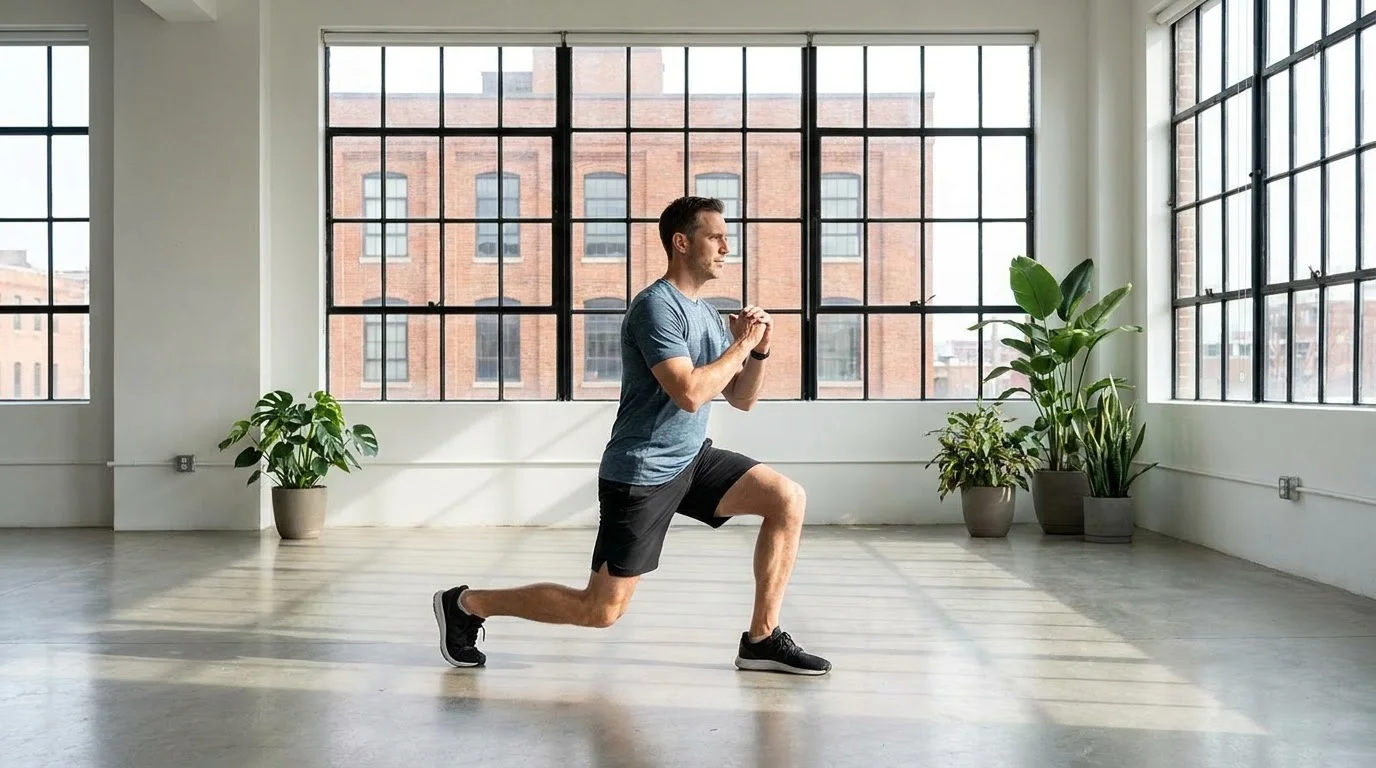
In a direct current EMS workout, we place electrode pads on the specific muscle groups you want to work, and you move through full exercises with the stimulation on. It feels like a strong, deep contraction, as if the muscle is being asked to work harder than it would on its own. That is the point: the stimulation pushes those muscles to do more with every rep.
Why Do We Use It?
Most of the people I coach are busy adults in their 40s, 50s, and beyond, along with athletes, and they all want the same thing: to feel better, build muscle, and get the most out of the time they have. EMS training is how we make every rep count.
The research backs this up. A 2023 review of 24 studies looked at adding electrical stimulation on top of a person's own exercise, and most of the studies reported a larger increase in strength than with the same exercise alone or stimulation alone [1]. Intensity matters too: a review of 89 e-stim strength training trials, focused on trained and elite athletes, linked strength gains to stimulation strong enough to make the muscle contract at 50% or more of a full-effort contraction [2]. Exercise and stimulation work best together, and they work best when the muscle is working hard.
There is a second reason, and it shows up in questions like these. Does anything feel tight when you train? Is one side doing all the work? Do your joints take a beating when you push harder?
Often the answer traces back to muscles that have gone quiet. Your muscles are your body's shock absorbers: they create force, and they absorb it, protecting your joints and tendons. After an injury, or after years of wear and tear, the brain often guards a muscle and turns it down to protect the area. The muscles around it pick up the slack, joints take load they should not, and training starts to feel like a grind. Putting the stimulation on those muscles while you move is how we bring them back into the work.
How Does It Work?
You choose the muscle groups you want to work, whether that is your glutes, quads, core, or shoulders, and we place the electrode pads right on them. Then you move through full exercises with the stimulation on. It drives those muscles to contract harder while you move, so they learn to create and absorb force in the patterns you actually use.
How long a session lasts and how it fits into your week depends on your goals, which we set together on our first call. EMS does not replace lifting or regular exercise. It makes the exercise you do count for more.
Does It Help With Anything Else?
Yes. The same tool that makes a workout more efficient has a long track record in recovery.
Coming back from surgery. A review of 11 randomized trials of people after ACL surgery found that adding neuromuscular electrical stimulation to standard physical therapy improved quad strength and physical function more than physical therapy alone in the early weeks after surgery [3]. If this is you, read why the quad will not turn on after ACL surgery.
Holding on to muscle when you cannot train. In a study where healthy young men had one knee immobilized for 5 days, the group without stimulation lost 3.5% of their quad size, while the group receiving stimulation twice a day kept theirs [4]. Strength still dropped in both groups, which is exactly why we pair stimulation with movement as soon as it is safe.
Who Should Ask a Doctor First
Electrical stimulation is not right for everyone. The Cleveland Clinic's guidance says not to use a unit if you are pregnant or have an implanted device like a pacemaker, cancer, epilepsy, deep vein thrombosis (a blood clot), a bleeding disorder, or heart disease, and to check with your healthcare provider first if you have any health condition [5].
Train With Us in Baltimore or From Home
I coach one-on-one in person in Baltimore, coming to your home in Fells Point, Harbor East, Canton, Federal Hill, Locust Point, or Mount Vernon. I also run a small group class, Wake Up at TIMBRE, in Fells Point.
If you are outside Baltimore or travel often, we coach one-on-one by video anywhere in the US. We ship the device to your home, and I still watch every rep live.
Thinking about a unit of your own? Read how to choose an NMES unit first.
Frequently Asked Questions
Does an EMS workout hurt?
The stimulation creates a strong contraction so the muscle works hard, and during the initial sponge electrode scan, people usually jump when we pass over a muscle the brain is guarding. When we move into the exercises, we follow a strict rule: if pain goes above a 3 out of 10, we adjust your workout.
Can you do an EMS workout at home?
Yes. In Baltimore, I come to you in the neighborhoods above. Anywhere else in the US, we coach by video with the device shipped to your home.
Does EMS replace lifting weights or regular exercise?
No. We combine the two: you move through full exercises with the direct current on, which is the pairing the research above supports. How long a session lasts and how it fits into your week depends on your goals, which I set with you on our first call.
If you have questions, reach out to me directly at zach@embodi3sports.com, or schedule a free 15-minute call.
Schedule a 15 Minute Call with Zach
Disclaimer: This article is for general information only. It is not a medical evaluation and does not replace an exam with your doctor or physical therapist. Embodi³ is a coaching program, not medical care. Talk with your doctor or physical therapist before you start a new exercise or device.
Sources
Borzuola R, Laudani L, Labanca L, Macaluso A. Superimposing neuromuscular electrical stimulation onto voluntary contractions to improve muscle strength and mass: a systematic review. European Journal of Sport Science, 2023. https://pubmed.ncbi.nlm.nih.gov/35856620/
Filipovic A, Kleinöder H, Dörmann U, Mester J. Electromyostimulation: a systematic review of the influence of training regimens and stimulation parameters on effectiveness in electromyostimulation training of selected strength parameters. Journal of Strength and Conditioning Research, 2011;25(11):3218-3238. https://pubmed.ncbi.nlm.nih.gov/21993042/
Hauger AV, Reiman MP, Bjordal JM, Sheets C, Ledbetter L, Goode AP. Neuromuscular electrical stimulation is effective in strengthening the quadriceps muscle after anterior cruciate ligament surgery. Knee Surgery, Sports Traumatology, Arthroscopy, 2018;26(2):399-410. https://pubmed.ncbi.nlm.nih.gov/28819679/
Dirks ML, Wall BT, Snijders T, Ottenbros CL, Verdijk LB, van Loon LJ. Neuromuscular electrical stimulation prevents muscle disuse atrophy during leg immobilization in humans. Acta Physiologica, 2014;210(3):628-641. https://pubmed.ncbi.nlm.nih.gov/24251881/
Cleveland Clinic. Transcutaneous Electrical Nerve Stimulation (TENS). https://my.clevelandclinic.org/health/treatments/15840-transcutaneous-electrical-nerve-stimulation-tens