Parents send me the same message all the time. It's a list of links to NMES machines, from a small unit on Amazon to one that looks like it came out of a PT clinic, and then the question: "Which one should we buy?"
If your athlete is trying to get the quad back as efficiently as possible after an ACL injury, I'd point you without hesitation to a direct current e-stim NMES device (read below to find out why)
If you pass on a direct current e-stim device, you can also find a decent NMES unit on Amazon or other stores online.
In this article, I'll explain why I prefer direct current e-stim NMES devices.
What An NMES Unit Is Supposed To Do After An ACL Injury
After an ACL injury or surgery, the brain turns the signal down to the quad in order to protect the knee (I explain more in Why Won't My Quad Turn On After ACL Surgery?).
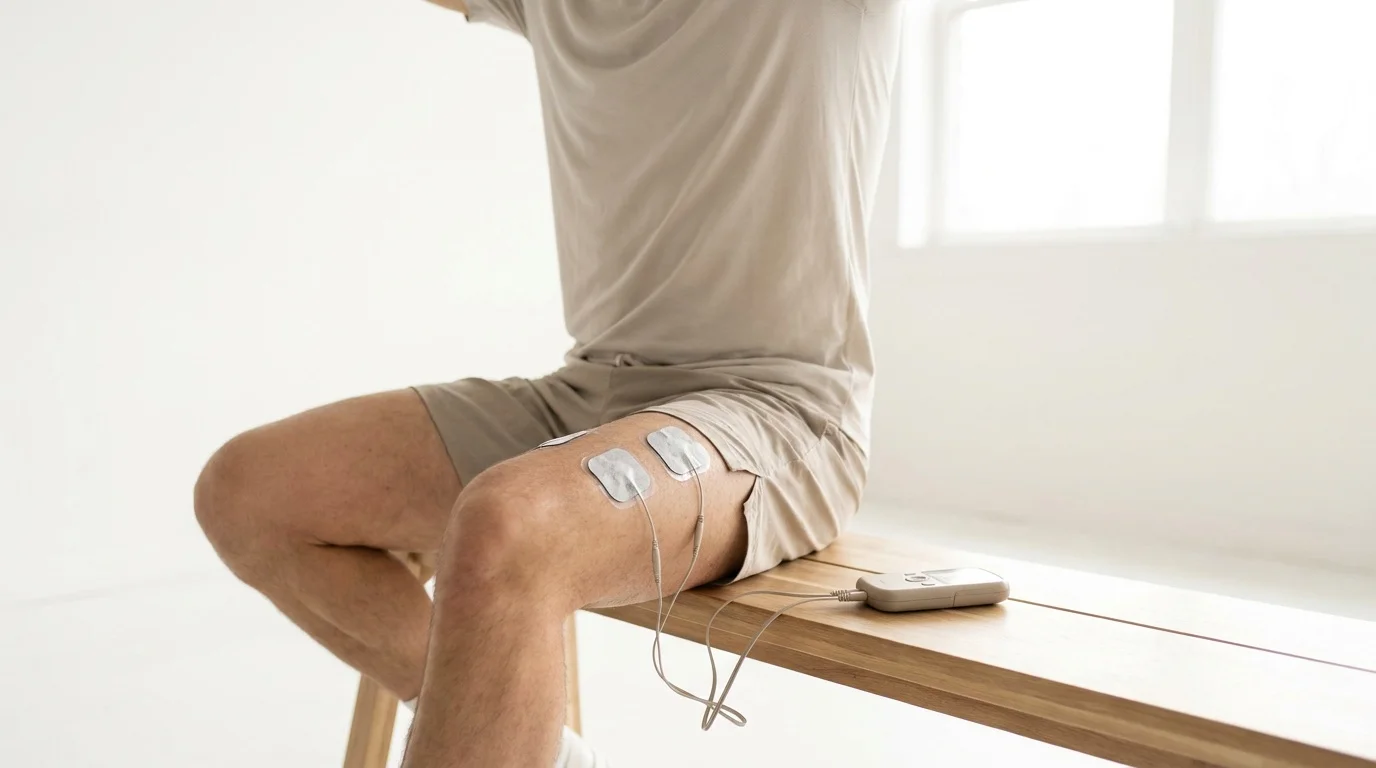
An NMES unit (neuromuscular electrical stimulation, the same thing most boxes call EMS) can be used to send an external electrical signal (generated by the device) through electrodes placed on the skin.
The signal goes through the skin to the nerves and muscle, causing the quad to contract.
Generating a quad contraction with an NMES device can be a great help to the recovery process, and the research behind it is strong.
A 2018 review of 11 randomized trials found that NMES added to physical therapy built more quad strength than physical therapy alone in the first few months after ACL surgery [1].
Why I Recommend Direct Current Over A "Standard" NMES Unit
While it's true that most NMES devices can be beneficial during the ACL recovery process, there is one type of NMES device that stands far beyond them all in terms of optimizing recovery.
The difference comes down to two things:
1) A concept called neuromuscular re-education
Neuromuscular re-education refers to the process of training the brain to utilize muscles as optimally as possible. This is particularly important after an ACL injury, because the brain starts using the quads (and other muscles) so differently after the injury occurs. A successful recovery will re-educate the muscles to work properly again as quickly as possible.
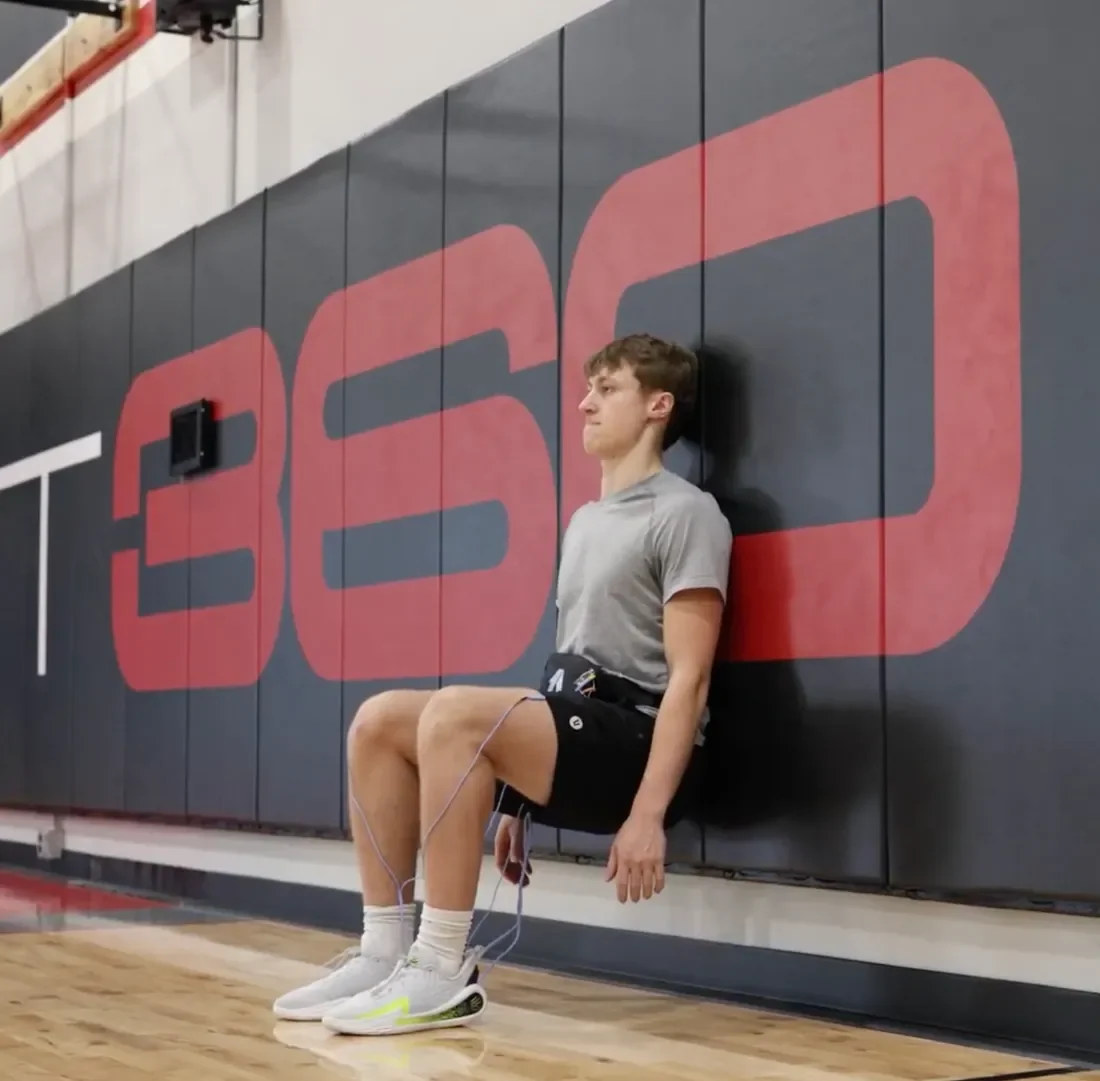
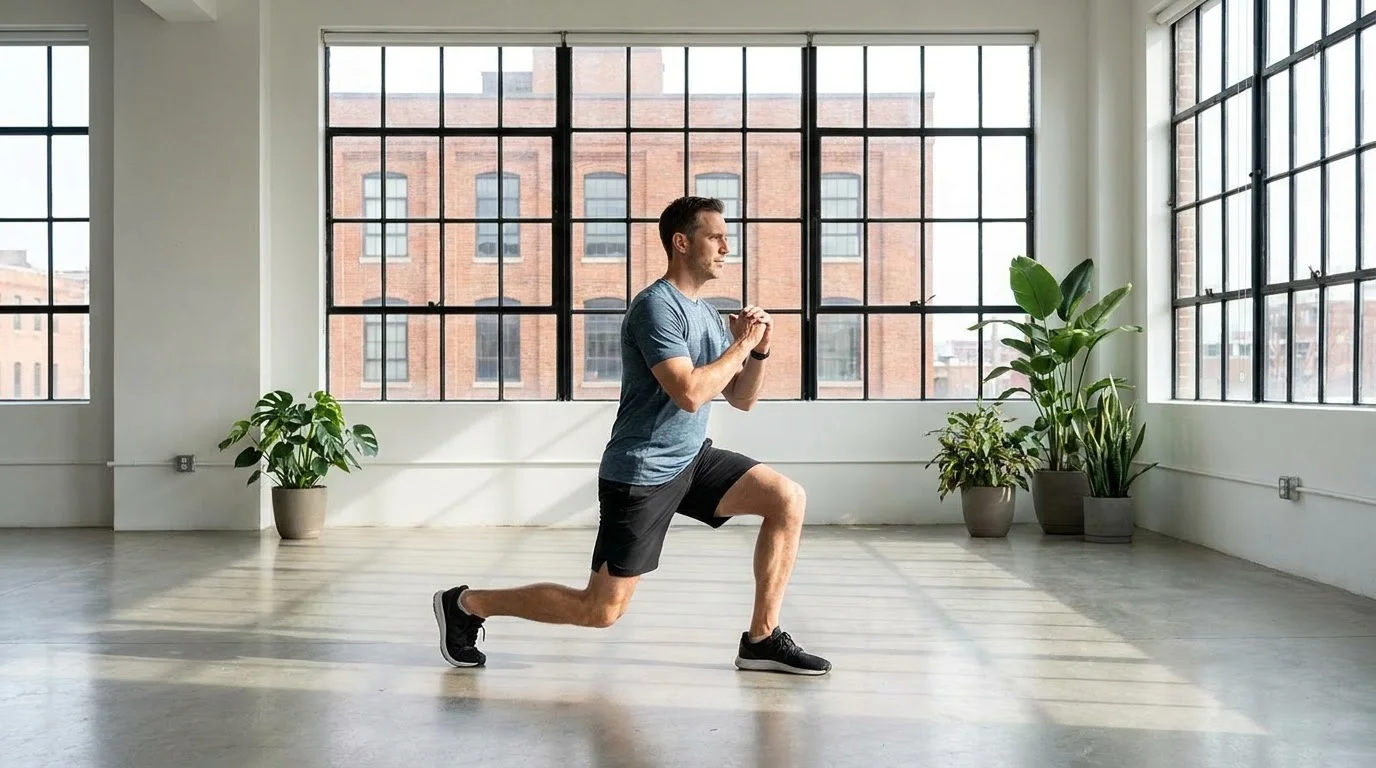
In order to achieve neuromuscular re-education, we need to teach the brain how to use the muscle properly through the full range of motion (think a squat pattern). In order to use the muscle in a full range of motion, we must move through the range of motion.
2) The type of current the device uses
NMES devices can utilize two types of electrical signal: alternating current (AC) or direct current (DC).
Alternating current devices tend to be much cheaper to engineer and manufacture; therefore, almost every device on the market uses AC.
These devices can generate a decent quad contraction and there is solid evidence around their benefit.
However, when alternating current is applied at higher levels that would provide even more benefit, it causes the muscles to "lock up."
When the muscles lock up, the user can no longer move thorugh a range of motion with the device on. You can't really squat, lunge, or step down, because the quad is clamped tight the whole time. Therefore, the ability to re-educate muscles with these devices is diminished.
Direct current e-stim works differently, and this is the reason I've built my coaching around these devices for nearly 10 years.
With a direct current e-stim device, we can go up to much higher levels of intensity and still work through the full range of motion. By doing so, we can teach the brain and the muscles to work properly again at all positions, which is what is needed for a successful ACL recovery.
The tradeoff is that these devices are typically more expensive than AC devices. Using these devices effectively also requires coaching, at least at the beginning.
Working with these devices can be really hard work, and to achieve the best results, strict attention to form and correct movement patterns is needed.
When it comes to NMES devices, these direct current e-stim devices truly stand far above any other.
If I could recommend one technology to an athlete, it would be a direct current e-stim device without hesitation.
Rent Or Buy Direct Current Through Embodi³
If you'd like to buy or rent a direct current e-stim device, we can help.
Through Embodi³, you can rent a device on a month to month basis and benefit from our 1 on 1 coaching program. We will show you exactly how to get the most out of your device and ensure you are moving with the quality required to get elite results in your ACL recovery.
If your athlete happens to already have standard NMES and still isn't progressing as they'd like, their nervous system may need a stronger signal combined with movement. That's where these direct current e-stim devices can be a real game changer.
Use the link below to reserve your spot on the Embodi³ waitlist and get started as soon as possible:
NMES Unit FAQs
Is an NMES unit the same as a TENS unit?
No. An NMES unit is built to make a muscle contract, and a TENS unit is built to ease pain. Many home units have both kinds of programs, so check which one you're running for best results.
Do NMES units work?
For quad strength after ACL surgery, yes. A 2018 review of 11 randomized trials found that NMES added to physical therapy built more quad strength than physical therapy alone [1], and a 2025 review found that people who started in the first week after surgery recovered more strength [2].
What is the best NMES unit for ACL rehab?
For the best result, I highly recommend a direct current e-stim device, pared with high quality 1 on 1 coaching.
Where can I buy an NMES machine?
Direct current e-stim NMES machines can be rented or purchased through Embodi³.
Standard units are sold online and in some pharmacies. A prescription unit can often be purchased through your PT, your doctor, or a medical supply company.
What does direct current e-stim feel like?
At a low level it feels like a light tingle or buzz. As the intensity goes up, it starts to grab the muscle and feels like a strong muscle contraction.
References
Hauger AV, Reiman MP, Bjordal JM, Sheets C, Ledbetter L, Goode AP. Neuromuscular electrical stimulation is effective in strengthening the quadriceps muscle after anterior cruciate ligament surgery. Knee Surgery, Sports Traumatology, Arthroscopy. 2018;26(2):399-410. https://pubmed.ncbi.nlm.nih.gov/28819679/
Li Z, Jin L, Chen Z, Shang Z, Geng Y, Tian S, Dong J. Effects of neuromuscular electrical stimulation on quadriceps femoris muscle strength and knee joint function in patients after ACL surgery: a systematic review and meta-analysis of randomized controlled trials. Orthopaedic Journal of Sports Medicine. 2025;13(1):23259671241275071. https://journals.sagepub.com/doi/10.1177/23259671241275071
Embodi³ is a coaching program, not medical care. Talk with your surgeon and your physical therapist before you start a new exercise or device.