(This is about a 3 minute read.)
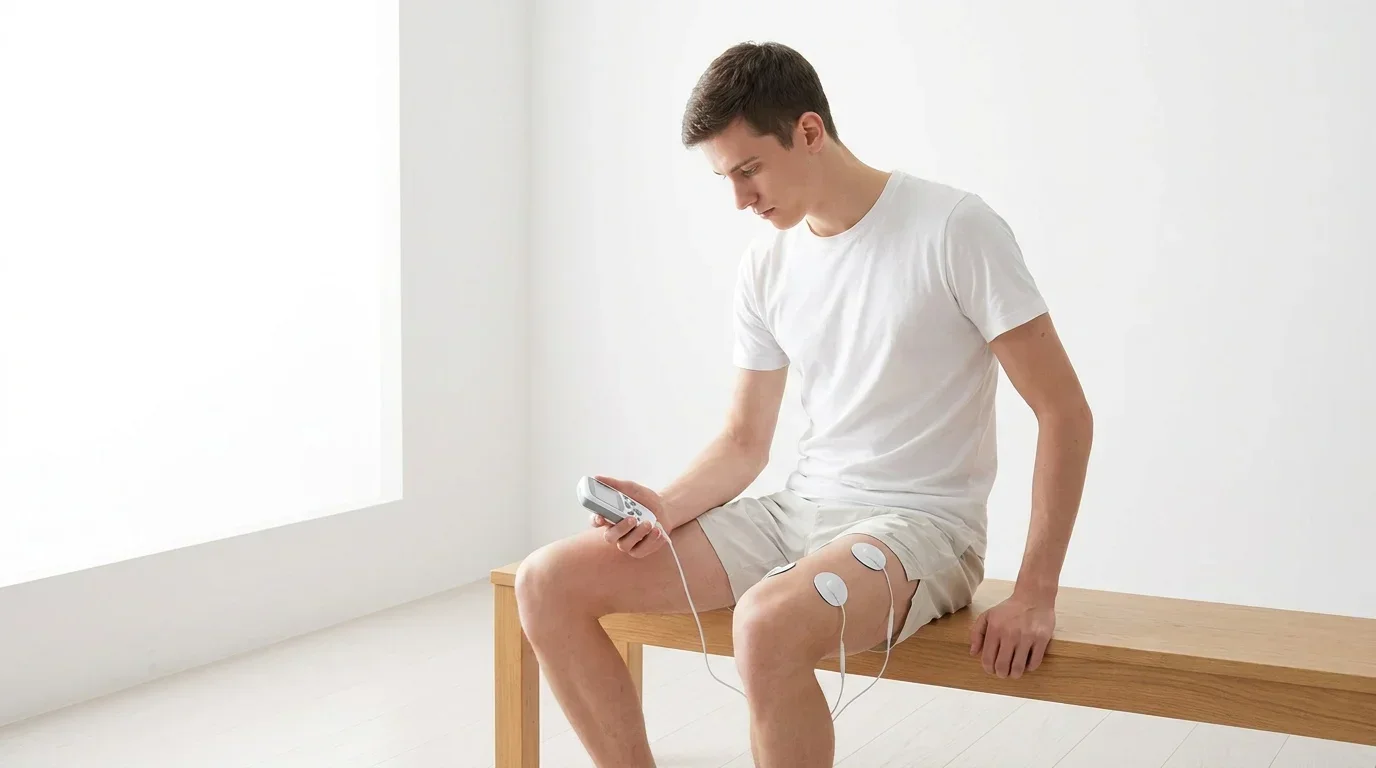
If your athlete just tore an ACL and you want to understand why the quad shuts down, this is a good place to start. In this interview, Zach explains why it happens, how he thinks about the weeks before surgery (prehab), and how the technology he uses with athletes, direct current e-stim, plays a role in restoring symmetry to the quads.
Zach recorded this episode of the Starting Block podcast (from Elite Level Performance) with hosts John and Chris in late 2022, before he started Embodi³. You'll hear the name of his former company, Accelerate ACL, and of the direct current e-stim device he used at that time. The ideas are the same ones we coach today at Embodi³.
Watch Zach on the Starting Block podcast on YouTube
How His Background In Engineering Led Him To Direct Current E-Stim (06:55)
Zach studied chemical engineering. He had shoulder and hip problems of his own, and the usual mobility drills didn't get to the bottom of them. He wanted a root cause approach, and that is how he found direct current e-stim.
Why Does The Quad Shut Down After An ACL Tear? (08:06)
Zach explains why he thinks no injury affects the neuromuscular system more than an ACL tear. When the ACL tears, the brain shuts down communication to the quad and the other muscles that move the knee. The quad is one of the big force absorbers around the knee, so when it stays off, the body finds workarounds that can lead to the next injury. If your athlete is in this stage now, Why Won't My Quad Turn On After ACL Surgery? has a free exercise to try today.
He also talks about the mental side, and why he wants to be a mentor through the process as well as a coach.
What Should Prehab Look Like If Surgery Is A Week Away? (12:52)
A host asks what Zach would do if his surgery were seven days out. Zach says he wants an athlete to go into surgery feeling as close to 100 percent as possible, past the usual prehab checklist of range of motion and straight leg raises.
What Does Direct Current E-Stim Show About Both Quads? (26:12)
Zach describes an observation he's made working with direct current e-stim after ACL injuries. At the same intensity, the ACL quad responds far less than the other quad. Zach's theory is that the ACL quad becomes underactive, while the opposite quad becomes hyperactive to take load off the injured leg. The goal is to get both quads responding evenly again, and that means the strong quad has to learn to relax too.
If you want to know how this differs from the e-stim unit in your PT's clinic, read TENS vs EMS.
Should The Work Stop At Return To Sport? (35:36)
Most athletes stop the work when they are cleared. Zach describes athletes whose ACL quad started to switch off again after they tweaked the knee, and he points to research that recommends continued neuromuscular training after an ACL injury. He is also clear (at 17:49) that the surgeon makes the return to sport call, because no test shows when the graft is ready.
Watch The Full Interview
The episode is about 41 minutes. The show's introduction runs for the first 3 minutes, and Zach joins at about 3:00.
Watch Zach on the Starting Block podcast on YouTube
If your athlete's quad still won't fire after a few weeks of work, the nervous system may need a stronger signal than exercise alone can give it, and that's where we can help. In a free 2-day trial, we ship the device to your home and show your athlete what changes when they move with it on, alongside their PT and within their surgeon's guidelines.