(This one is about a 5 minute read.)
"Is it possible to speed up ACL recovery?" Josh Bond asked me that on his podcast, Kneed To Know. Josh had ACL surgery himself, and he told me the hardest part for him was the surgery and that first month after it.
My answer is yes, in many cases, as long as every step stays within your surgeon's guidelines. Recovery tends to move faster when your athlete goes into surgery feeling 100 percent, gets range of motion back as soon as the surgeon allows it, and gets the muscles around the knee working again early.
Can Prehab Speed Up ACL Recovery?
The first chance to start working is before surgery, in the prehab phase. I like to start two to six weeks before surgery, and the more work we can get in during that time, the better.
Range of motion and strength before surgery matter for the recovery after it, and so does confidence. An athlete who runs around like they're 100 percent before surgery will come out of surgery that much more confident and ready to go. If you want specific targets for those weeks, I lay them out in 8 ACL prehab goals.
How Fast Does Range Of Motion Come Back After ACL Surgery?
It depends a lot on when your surgeon clears it. Surgeons clear full flexion work (bending the knee all the way) at very different times, anywhere from two weeks to six to eight weeks after surgery. The specific surgery and the graft type probably play a part, too.
Once the surgeon allows for it, consistent work is what brings range of motion back. This matters more than most people think. Josh told me he still knows people who are a year out and haven't gotten their full range of motion back, and that makes every later stage of the recovery harder.
What Can You Do Today (For Free)?
The first thing I help athletes with is advocacy, which means knowing which questions to ask their doctor and their PT. You can start on that today. Before the next appointment, write these questions down and bring them with you.
- When can we start full flexion work?
- What range of motion do you want to see by my next visit?
- When will you check my walking, and what are you looking for?
- When do you expect to clear me for running?
Write the answers down as you get them. Then make sure your surgeon and your PT both know about all the work you're doing, so everyone is working within the same guidelines.
When Can You Start Running After ACL Surgery?
Typically surgeons clear athletes for running around the 3 to 4 month mark. Josh started running in that window, which he called a pretty standard recovery.
Within the surgeon's guidelines, I start to check activity levels about three to four weeks into the work. I look at pain and at walking mechanics. If those look good, we may start introducing more activity to simulate running.
You can do a quick check on your athlete's walking at home. Does the knee stay a little bent with each step? Do they shift their weight onto the good leg? Does the knee hurt more than a 2 out of 10 while they walk? If the answer to any of these is yes, bring it up with your PT before the work gets harder. (The ACL recovery timeline shows where these weeks fit in the bigger picture.)
Where Does Direct Current E-Stim Fit In?
The second thing that sets our approach apart is direct current e-stim, which helps athletes to overcome some of the neuromuscular challenges of recovering from ACL injuries. This is how it fits at each stage.
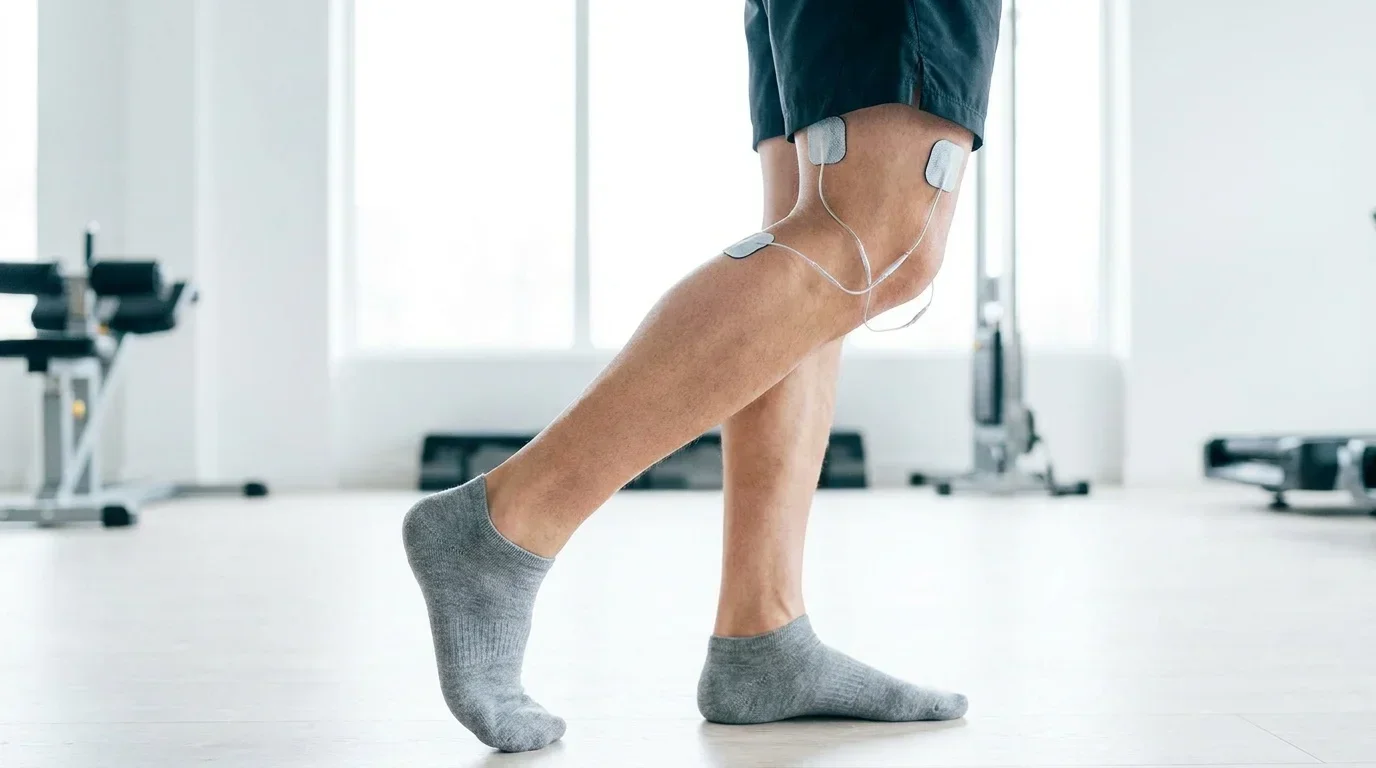
Right after surgery, before your athlete is cleared for much movement, direct current e-stim devices can be applied around the incision to bring blood flow to the area. Keeping that blood flow and nervous system communication going helps reduce the risk of scar tissue, which can be a big problem later in the recovery.
In the stages to follow, the pads are typically applied to the quad, as the athlete executes a seated march. (If the quad won't turn on at all yet, start with why your quad won't turn on after ACL surgery.)
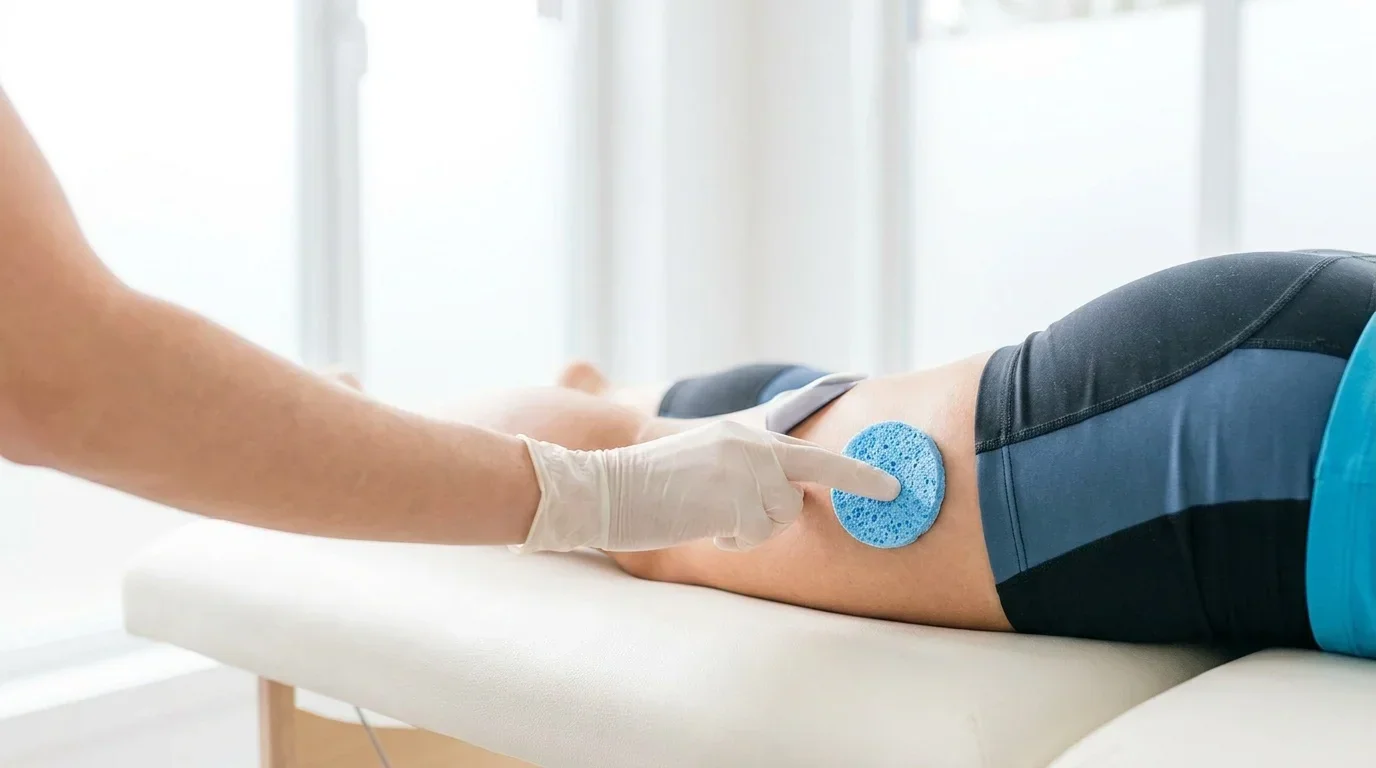
After that comes a process called the search. A blue sponge about three inches across "asks" the nervous system, "are you okay firing this muscle?" When the answer is no, the intensity of the direct current e-stim becomes much higher. That is how direct current e-stim can be used to find a guarded muscle, and the root cause of a movement problem outside the quad. You can see what the search shows in this video.
If your athlete has done the prehab and kept up with range of motion, and the quad or the walking still isn't where the surgeon expects, the nervous system may need a stronger signal than exercise alone can give it. That's where we can help.
Feel It On Your Own Knee
In a free 2-day trial, we ship the device to your home and work with you over a couple of days so you learn the ins and outs of how to use it. Together we figure out if it can help, and from there we can talk about a plan built around your needs. All of it happens within the guidelines from your PT and surgeon.
Getting back to 100 percent is possible. You need the right plan, and you need to be consistent. Get to work.
Embodi³ is a coaching program, not medical care. Talk with your surgeon and your physical therapist before you start a new exercise or device.