(This one is about a 5 minute read.)
You're a few months past ACL surgery, and you feel behind where you should be.
When I see athletes fall behind after ACL surgery, the most common reason is a knee that won't stay fully straight under load. The second is pain that gets pushed too far, too often. The good news is that you can work on both, and it starts with how you load the knee and how you talk to your PT about pain levels.
Why Does My Knee Straighten On The Table But Not When I Move?
I often see that an athlete can straighten the knee sitting on a table to reach full extension. However, when they try to perform a single leg calf raise, a sprint, or a jump, the knee doesn't want to stay straight.
Getting that last little bit of extension is what helps the muscles around the knee to absorb more force. When full extension is missing, the force goes into the knee instead, potentially delaying recovery.
Think of the muscles as springs. When the knee can't get to full extension under load, the springs can't do their full job, and the joint takes the hit.
If getting the knee straight in the first place is still a struggle, start with how to get your knee straight after ACL surgery.
Is My Quad Still Behind My Other Leg?
Very often, yes. The quad on the ACL injured leg is often MUCH less responsive than the opposite leg after the injury and surgery. Your brain turned it down to protect the knee, and it doesn't turn it all the way back up on its own.
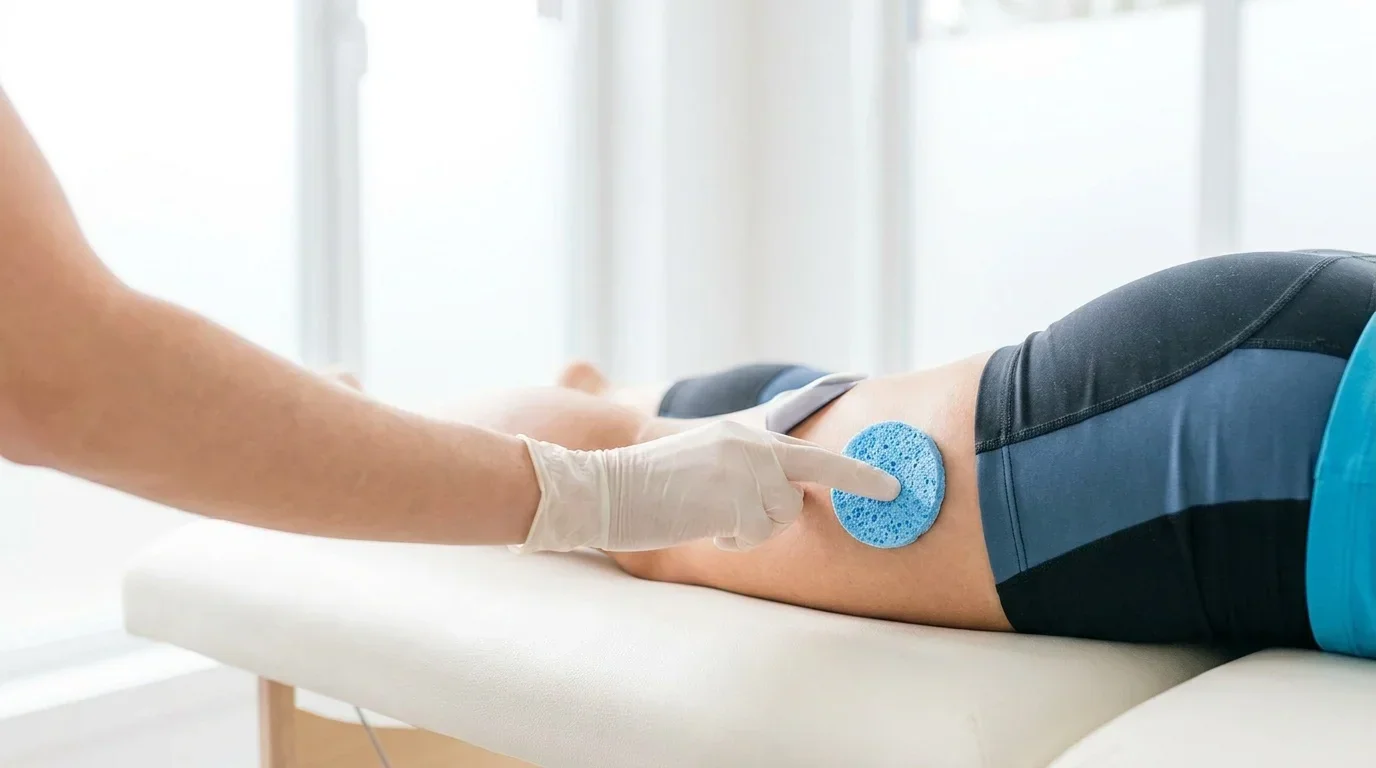
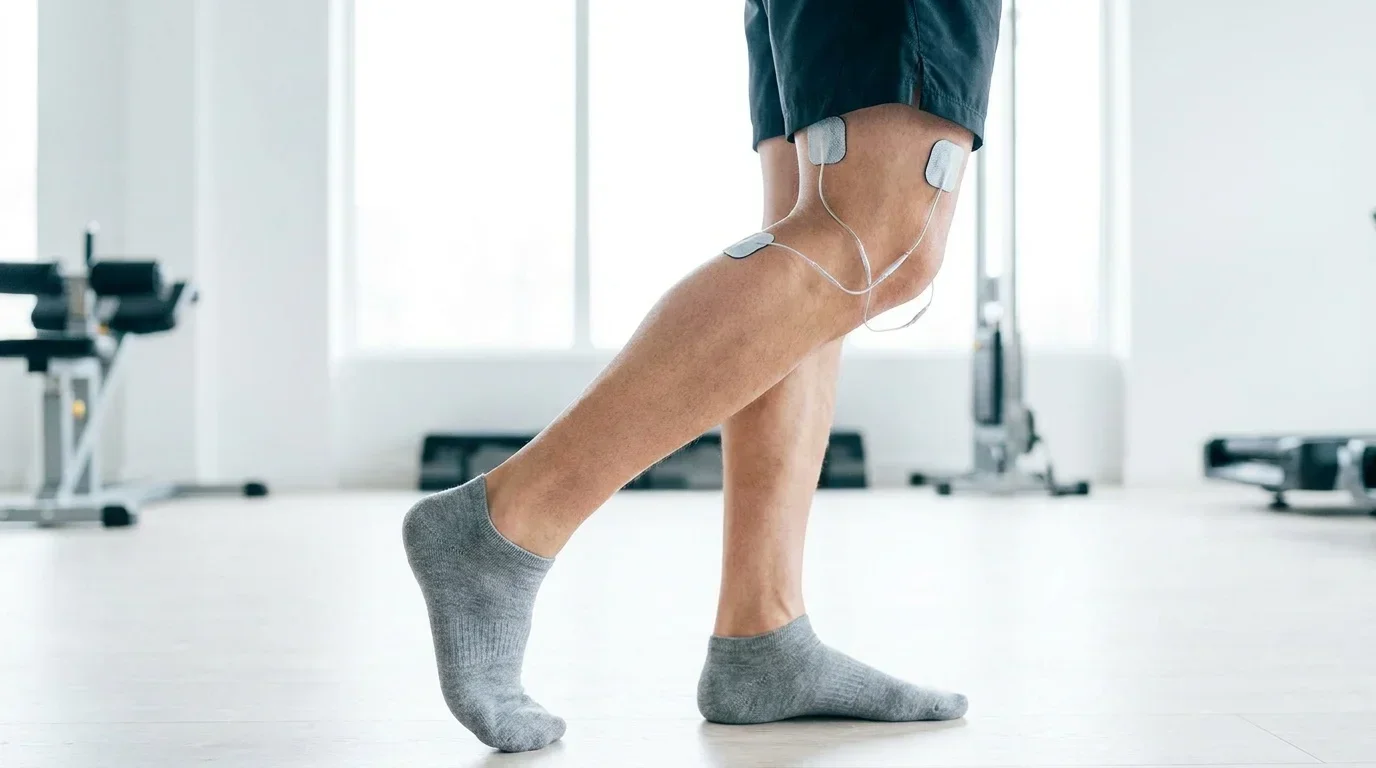
When I work with an athlete on direct current e-stim, I can see this in how each quad responds to the current. Over time, the response to the current tends to balance out, which tells me that neuromuscular balance is being restored to both quadriceps. (If your quad still won't fire at all, I break that down in why won't my quad turn on after ACL surgery.)
How Much Pain Is Okay To Work Through?
Pain is your brain telling you it sees a threat.
If you keep pushing through a 4, 5, or 6 out of 10, the brain can shut muscles down again. That undoes the work you've put into the quad and into extension.
This is the guide I give athletes, and it's how I coach them to talk to their PT about pain levels:
- A 1, 2, or 3 out of 10 is generally fine to work through.
- If it climbs above a 3, write down how much you did (the sets, the reps, the distance).
- Stop for the day.
- Next time, build on that number instead of trying to beat it all at once.
One thing to keep separate is the discomfort you can feel from the current on the device. That is a different thing from pain in the knee, so rate the knee on its own.
This matters most when you start return to sport activities like running and jumping, because that's when athletes feel close and push through a 5. Be smart about the pain levels you work into.
What You Can Do Today: Load The Knee Straight
The best thing you can do on your own is to keep loading the knee in full extension, so your brain doesn't lose what that position feels like. My go-to is an isometric hold in a single-leg calf raise. As long as your surgeon and PT have cleared you for it, this is how I'd do it.
- Stand on your ACL leg next to a wall or a counter for balance.
- Get the knee as straight as it will go, and squeeze the quad.
- Rise up onto the ball of your foot and hold it there, keeping the knee straight the whole time.
- Time the hold. Rest, do a few more, and try to beat your best hold each day.
Keep the pain at a 3 out of 10 or below, and stay within your surgeon's guidelines.
After a few days, check in with yourself. Does the knee stay straighter at the top of the hold than it did on day one? Can you feel the quad working the whole time, or does it fade out?
What If One Spot Keeps Hurting?
I once got asked about a lacrosse player whose hamstring stayed a hot spot. These are the questions I ask myself in that case.
Is there a compensation pattern I'm not seeing? Is the athlete eating enough protein, drinking enough water, and sleeping well? (Recovery runs on the basics. I cover protein in what to eat after ACL surgery.)
For the first one to two months, I focus on the quads, because that's where the biggest gap usually is. After that, I map the body to find where the work needs to go next.
Feel It On Your Own Knee
If you've done the straight-knee work for a couple of weeks and you still feel behind, your nervous system may need a stronger signal than exercise alone can give it. The fastest way to understand direct current e-stim is to feel it.
In a free 2-day trial, we ship the device to your home, map where your nervous system is guarding the knee, and take you through a workout with it on. All of this happens within the guidelines from your PT and surgeon.
You are the number one person responsible for your recovery. Load the knee straight, respect the pain numbers, and get to work.
Embodi³ is a coaching program, not medical care. Talk with your surgeon and your physical therapist before you start a new exercise or device.