This article will be slightly complex and technical in nature, and more than likely contain information you haven't heard anywhere else. However, I believe that understanding these concepts may be what stands between where you are now in your ACL recovery and where you WANT to be in your ACL recovery. I also have more than enough faith that you can keep up with the technical side.
Why this information isn't more commonly shared, I don't know. I think it traces back to the idea that our healthcare system largely treats "symptoms," rather than root causes. I DO know that when we apply these principles with our athletes around the United States, we make progress.
This article will help you to do a little more "root cause" thinking on how to improve your ACL recovery and/or finally break through the plateau you're running into.
The Sensors In Your Body
Your body is full of sensors that gather information about their environment and relay it back to the brain. The brain processes this information and decides the best course of action.
One example of such a sensor is called a "thermoreceptor," which senses temperature. When you walk outside on a freezing cold day in a t-shirt, the thermoreceptors sense cold temperature, and the brain responds in many ways, some conscious (put on a jacket) and others subconscious (shivering).
You may find that if you focus hard enough, you can override the subconscious responses and relax the body, despite the cold temperatures. If you practice this consistently, you may be able to re-train the body to not shiver when you walk outside into a cold atmosphere.
The Neuromuscular Sensors Involved With ACL Recovery
Similar to the thermoreceptors in our skin that sense temperature, there are sensors in our muscles that relay information to the brain about the current condition of the muscle. They help the brain to understand how much load the muscle is under and how stretched (or long) the muscle is.
The name for the receptor that senses "load" on a muscle is called the golgi tendon organ (fun name, right?) It sits at the origin (beginning) and insertion (end) of the muscle.
The name for the receptor that senses "length" of a muscle is called the muscle spindle (less fun name). It sits in the body (middle) of the muscle.
Both of these receptors continuously gather information about the current state of the muscle. Is it being loaded? Is it being stretched? They send this information to the central nervous system (CNS), which makes a determination on whether it is "ok" with the state of the muscle.
If the CNS is ok with the state of the muscle, it allows you to continue with business as usual. If the CNS is NOT ok with the state of the muscle, it says "not so fast, my friend." It will somehow adjust the body to either take load off of the muscle or shorten the muscle.
How These Sensors Limit Your Recovery After ACL Injuries And Surgery
After an ACL injury and ACL surgery, the CNS becomes HIGHLY sensitive about the information it is receiving from these sensors. It realizes there has been a traumatic event in the area, and is doing whatever it can to protect against it happening again. If certain muscles are loaded just a tiny bit, it will rapidly do what it can to "unload" the muscle. If other muscles are "stretched" just a tiny bit, it will rapidly shorten the muscle.
Going back to our example about wearing a t-shirt in cold weather - the CNS becomes so sensitive, that you can think about it as if your body started shivering at an outside temperature of 70 degrees.
It is your job during the ACL recovery process to be aware of these processes and re-train the body to not be so protective of loading and lengthening muscles. Otherwise, your CNS will ingrain these patterns, your muscles will not be able to perform at full capacity, and you will move less efficiently (which may set you up for injury down the road).
How Embodi³ Protocols Are Designed To "Hack" These Neuromuscular Sensors
One of the things that makes Embodi³ protocols so effective is that our athletes can "hack" these neuromuscular feedback loops and re-train them at a much more efficient rate than with only exercise.
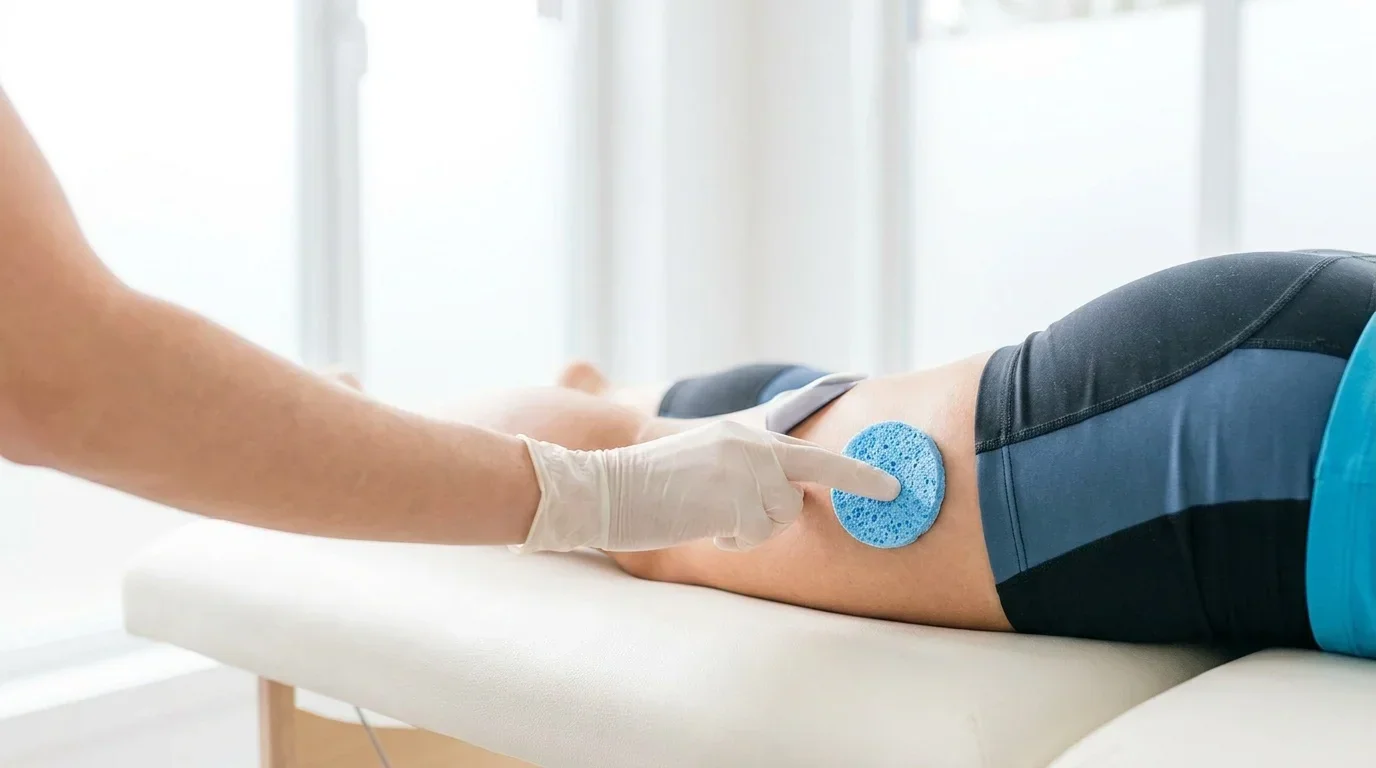
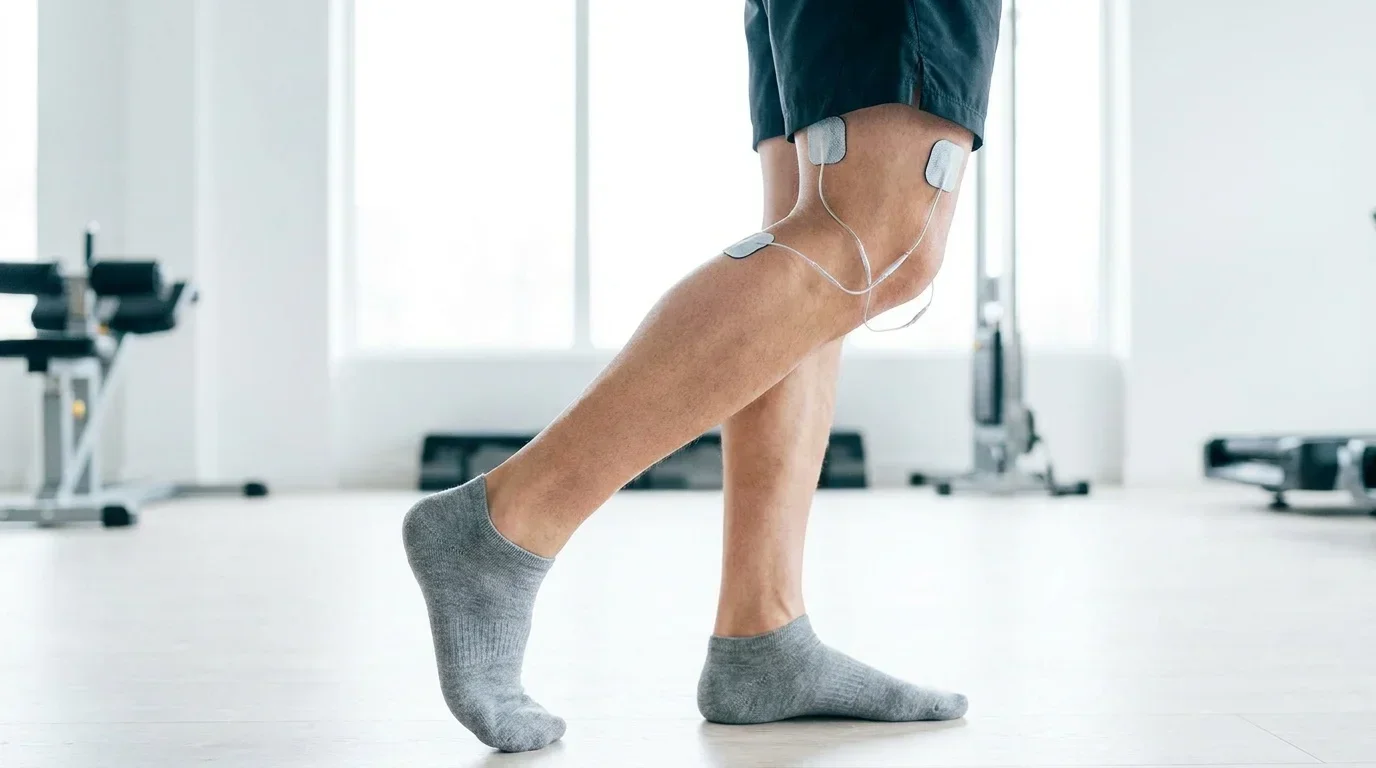
The protocols use a technology and process that allow us to "map" the body for the specific sensors that the central nervous system is guarding the most. Often times, during the ACL recovery process, we find areas of the quad, hamstring, and calf, to be the most highly guarded.
Once we identify your unique areas, we can simulate the "signal" the central nervous system receives when these sensors are being loaded. By simulating the signals and combining it with movement, we can immediately start to see the way your CNS is guarding. Hacking the CNS with this kind of specificity will raise your awareness level of your compensation patterns (more on those here) AND give you the ability to re-train these neuromuscular sensors to work correctly again, at a much faster rate than would be doable with exercise alone.
Hacking The Neuromuscular System Without Embodi³
Without the technology used at Embodi³, you can still hack this system, albeit at a slower rate. The first step is what you are doing right now, reading this article. Simply raising your awareness level of how the body works after ACL injuries is a BIG first step.
Now, all you have to do is listen to what your body is telling you. This is where you'll find the information that Embodi³ normally finds by simulating the sensors' signal.
When you try to do an exercise, are you doing it exactly as your physical therapist or trainer has prescribed? If not, how are you compensating? Are you able to focus a little harder to get the exercise right? Does anything feel tight (like the muscle won't let go)? Does it feel nearly impossible to get into the position your PT or trainer is asking for?
When you start to pick up on these things, don't just write them off as "the way it is." These are IMPORTANT! They are all signs that your neuromuscular system is limiting you in some way.
Work your exercises in a range of motion that is challenging to maintain good form (but doable). Load a tight muscle just a little bit as it lengthens and see if it relaxes for you. Think about working right on the threshold of where the CNS starts trying to make adjustments.
Start to attack your ACL recovery with this mindset, and you will be on your way to hacking the neuromuscular system for a more efficient recovery.
Want To See It On Your Own Knee?
The fastest way to understand this is to feel it. In a free 2-day trial, we map the areas your nervous system is guarding the most and show you what happens when we add movement. You can book it with the button below.