
Before you read:
This is a long one (5 minute read), but I didn't want to leave a single word out.. it's that important.
The information in this post may appear "scary" on its surface, as it describes problems that can develop months after ACL surgery head on (no fluff here). I always take the stance that I'd rather arm people with information and let them choose how to respond than leave them in the dark. So, please try to frame these words in the following light, depending on where you are in the ACL recovery process.
If you've just been injured or are just starting the rehab process (Pre-Surgery to 6 months after surgery):
I encourage you to read this post for basic principles. If you digest these principles and apply them early in your rehab process, it is MUCH less likely you will run into problems later on. You will be a shining star in the ACL recovery world.
If you're feeling frustrated 6+ months after ACL surgery:
Read this post, digest the information, and dig deep within yourself for the solutions. Armed with this information, you CAN still get back to one hundred percent, but you need to get to the bottom of what's going on.
Breaking The Cycle Of Frustration That Sets In After ACL Surgery
It's been months since ACL surgery. You've suffered through the painful and groggy early days, gotten range of motion back, and put in the work to build strength. You've done everything that's been asked of you, and yet, here we are.
You look around on the support groups on social media and notice that others are celebrating victories.
Meanwhile, you're not feeling like your old self just yet, and you're starting to think it's a problem. It's starting to get difficult to see the light at the end of the tunnel.
First, I want you to understand this:
You are not alone.
Statistics show that there are a higher percentage of people feeling just like you months after ACL surgery than those who are celebrating their return to one hundred percent.
There are many people out there just like you. They just may not be as vocal about it on social media as those who are having success.
Returning to one hundred percent after ACL surgery can be a long grind. But you will get there.
As you transition out of the "rehab" phase, where there are very clearly defined goals like "get your range of motion to 135" or "make sure your surgical leg has at least 90% of the strength as the non-surgical leg", goals become a bit more abstract.
With the goals becoming more abstract, it can feel hard to stay motivated. But you know that without motivation, you probably won't get any better.
This post is intended to arm you with the information needed to re-focus your efforts. We'll cover a little bit of technical background on how you got here, why you're feeling the way you are, and WHY it can feel like you're stuck in an endless cycle.
Armed with that information, my hope is that you'll be able to understand the importance of the key areas you can place your focus at the end of the article.
The Cycle Of Frustration
This is a diagram we developed that we feel conceptually captures where a lot of people are in this world (whether they're months after ACL surgery or just dealing with some kind of nagging injury). We used to call it the "Nagging Aches and Pains" flow chart, but our clients convinced us to change the name to "The Cycle Of Frustration."
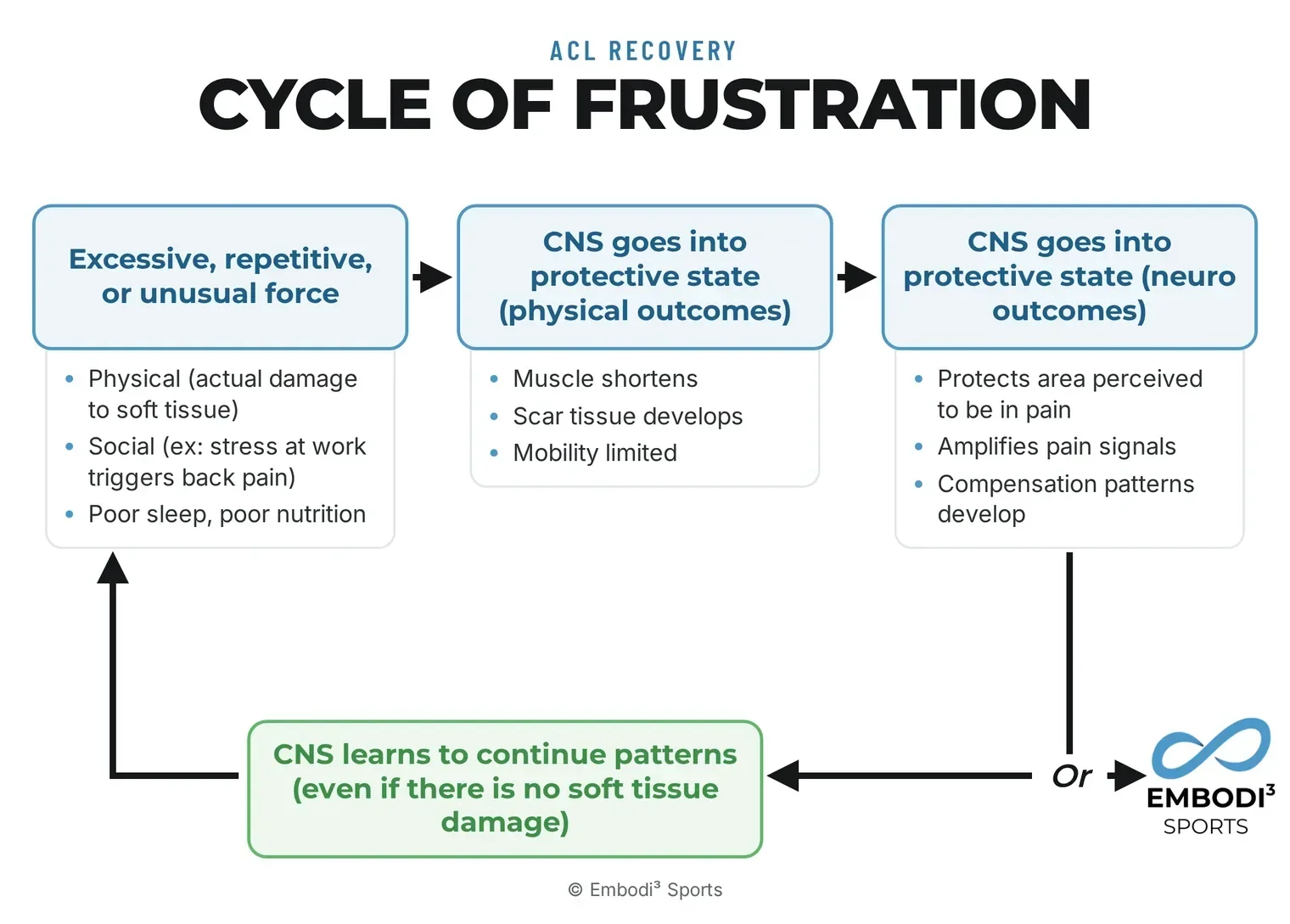
The Cycle of Frustration.
Step 1: Excessive, Repetitive, Or Unusual Force
The cycle begins with an excessive, repetitive, or unusual force. For some of you, the cycle may have begun with the ACL tear itself. For others, it could have begun with a previous injury that initiated the cycle and eventually led to an ACL tear.
While these forces are generally thought to be physical (causing some sort of tissue damage), the cycle can also be initiated by social, psychological, and lifestyle factors like stress, poor sleep, and poor nutrition.
Step 2: The Central Nervous System Goes Into A Protective State
The central nervous system is the "control system" of our body. Its number one priority is keeping you safe. Once it senses that there is an unsafe condition somewhere in the body, it starts to lock things down.
Physically, muscles shorten and scar tissue may even set in, causing stiffness and mobility to become limited.
Neurologically, pain signals amplify. Think about the brain "turning up the volume" on pain signals in the area it seeks to protect. Additionally, compensation patterns will start to develop. The brain will purposely change the way you move to try to avoid putting stress into the injured area.
Step 3: The Central Nervous System Learns To Continue The Patterns
Over time, the central nervous system ingrains these new patterns of stiffness, pain amplification, and compensation patterns in its operating system (even if the tissue damage has healed).
Muscles are no longer absorbing force as efficiently as they used to and the new movement patterns will likely cause excessive, repetitive, or unusual force to begin in another area of the body.
Hence, the pattern continues. It's possible that you'll consistently "flare up" the previously injured area or start to develop a string of injuries elsewhere in the body.
Breaking Free
(This is the part where I have to remind you: in no way do I want this information to scare you. My goal is only to give you the information needed to SOLVE the problem. The fastest way to understand it is to face the facts head on.)
The cycle will likely continue unless you do one of two things:
- Lessen activity levels (not my preference)
- Get to the bottom of it
Surface level solutions like massage, anti-inflammatory medication, and icing won't help fix the problem. They'll mask it for a while, but the underlying patterns that cause the pain will still be there.
You'll need to figure out how the cycle of frustration began, how your body has responded, and work to undo those changes.
Good physical therapists and personal trainers can help, but MAKE SURE they are speaking this kind of language to you.
Ask questions about your:
- Compensation patterns,
- When it's appropriate to push through different aches and pains,
- Whether or not your problem could be coming from somewhere else in the body than where you're experiencing symptoms.
If they can't speak knowledgably in these areas, head for the door. There are a lot of good ones out there, but they aren't all good ones.
Last but not least, as you digest this information over the days to come, I encourage you to try to see it as something you can act on. If you've been struggling with persistent pain, repetitive injuries, or still aren't back to one hundred percent months after ACL surgery, the problem lies within this post.
Whether or not you choose to seek the answers is up to you.
How Embodi³ Can Help
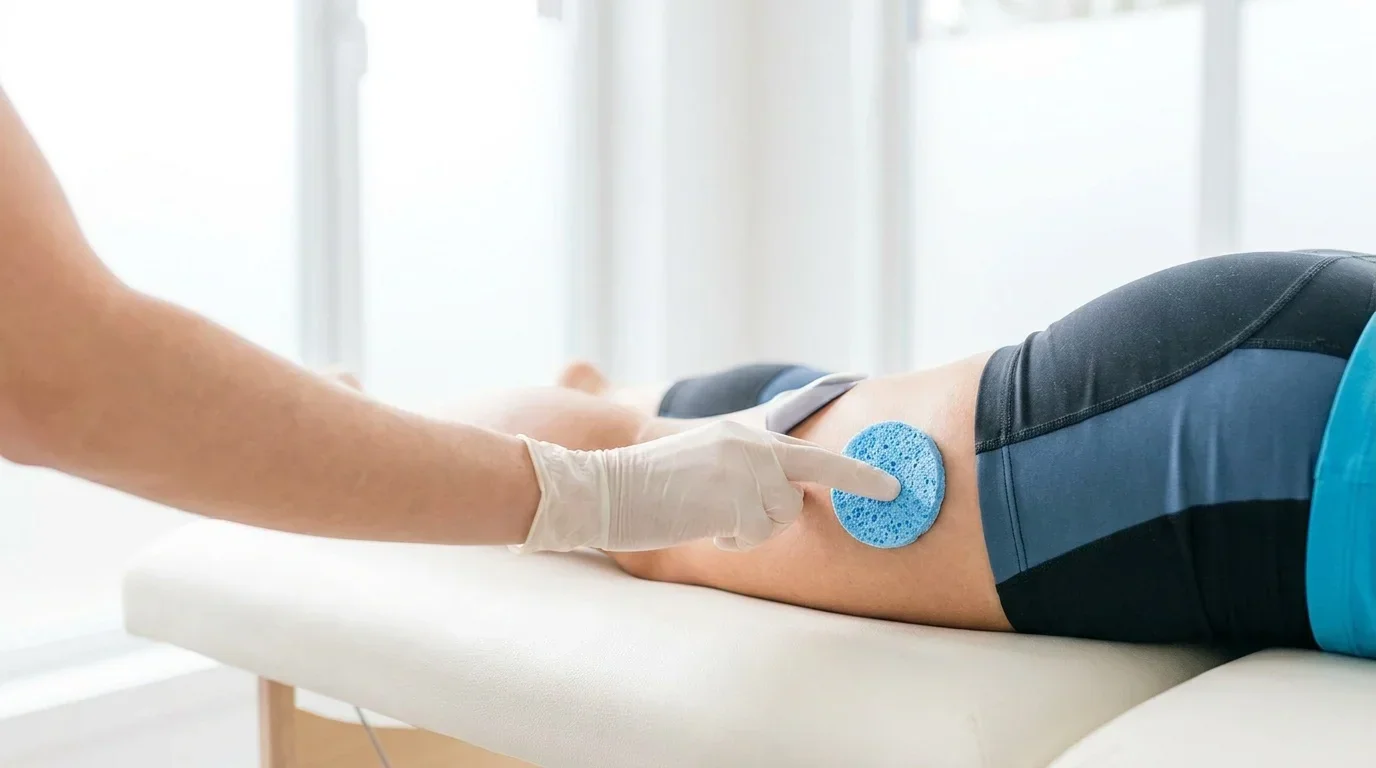
If you're stuck in the cycle, our job is to get to the bottom of it. We use direct current e-stim to search the body for the areas your nervous system is guarding the most. Then we work those areas while you move, so the brain can start to let go of the old patterns. You can try it in a free 2-day trial with the button below.