
What Is My BMI?
What is my BMI?
BMI or “body mass index” is a scale that uses height and weight to estimate whether you are:
Underweight
Healthy Weight
Overweight
Obese
Your BMI can be calculated using a BMI calculator from the CDC or NIH website, which is linked below.

Limitations of BMI: NFL superstar Christian McCaffrey would be considered “overweight” on the BMI scale.
Limitations of BMI
Before I go further, I want to include a disclaimer about BMI.
BMI is one of my biggest pet peeves in the world of health and wellness - while height and weight can give us a VERY rough estimate of how healthy a person is based on their weight, it has significant limitations.
Our body weight is composed of two types of weight:
Lean Body Mass (All body weight that is not fat)
Fat Mass
As a general rule of thumb, it is considered healthy to have more lean body mass. If your weight is increased due to increased lean body mass, you are likely in better health than if you had a lower proportion of lean body mass.
BMI does not differentiate between lean body mass or fat mass. Therefore, those who have more lean body mass may be considered “overweight” or even “obsese”; yet, they actually look quite healthy.
As an example, NFL superstar Christian McCaffrey (pictured above) is listed at 5’11” and 210 pounds.
Using the CDC’s BMI calculator, McCaffrey’s BMI is 29.3, placing him just at the high end of the “overweight” bracket and just below “obese.”
When I look at Christian McCaffrey, I do not see an overweight or obese person. I see a physical specimen.
This is one example of the limitations of BMI - it does not adequately factor in lean mass to assess the level of a person’s health.
A better indicator of health based on height, weight, and lean mass
BMI For Women Vs. BMI For Men
Additionally, BMI calculators do not factor in differences for BMI for women or BMI for men.
Men generally carry much more lean mass than women, yet the BMI scale places men and women on the same scale.
In my opinion, there should be a separate calculator for men and women. However, a BMI calculator for women and BMI calculator for men does not exist.
What Is My BMI?
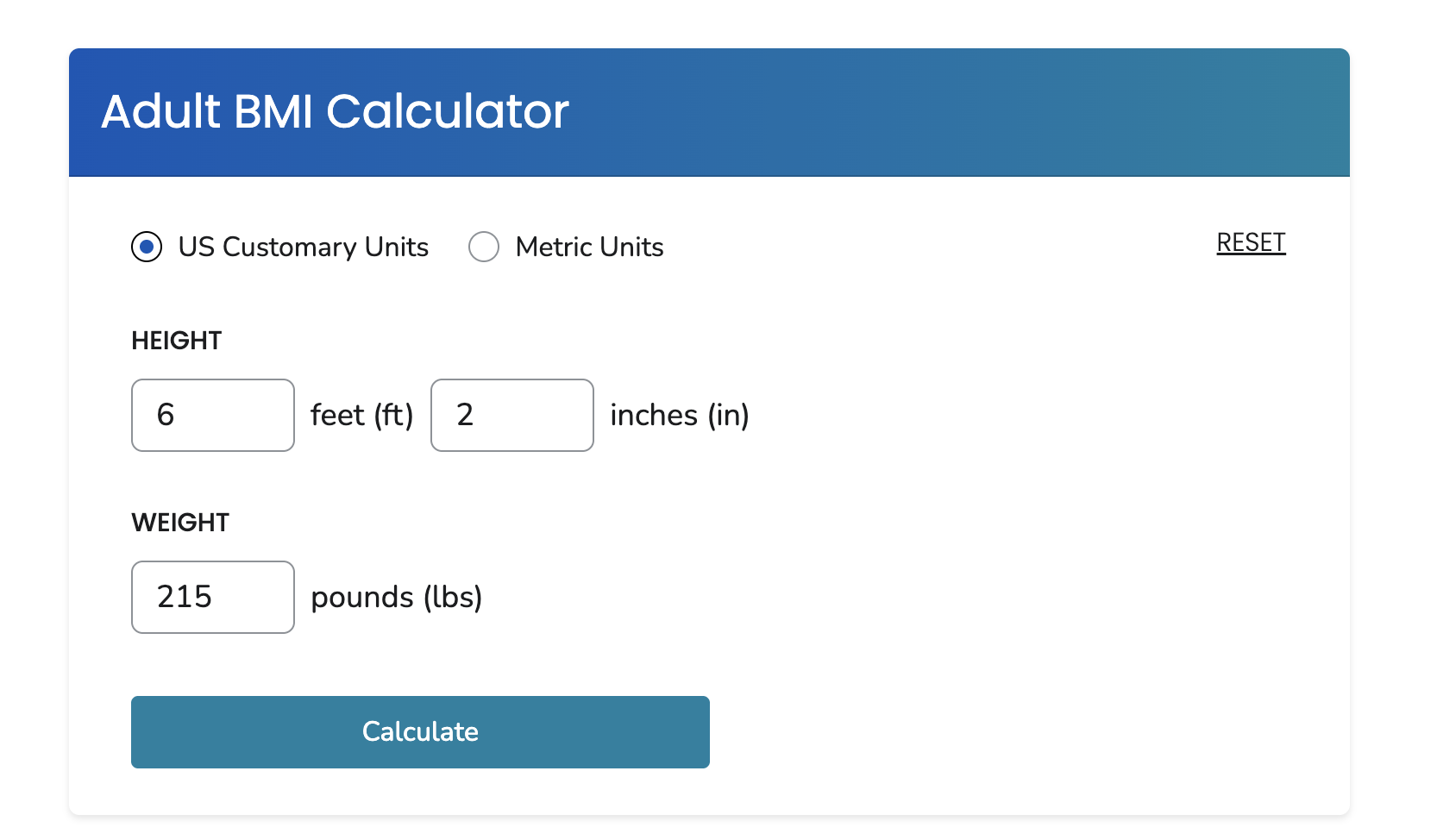
To calculate BMI, you can use the BMI calculator provided on the CDC or NIH websites.
You’ll simply enter in your height and weight, and it will return your BMI, as well as which bracket (underweight, healthy weight, overweight, or obese) you fall in.
What should I use instead of BMI?
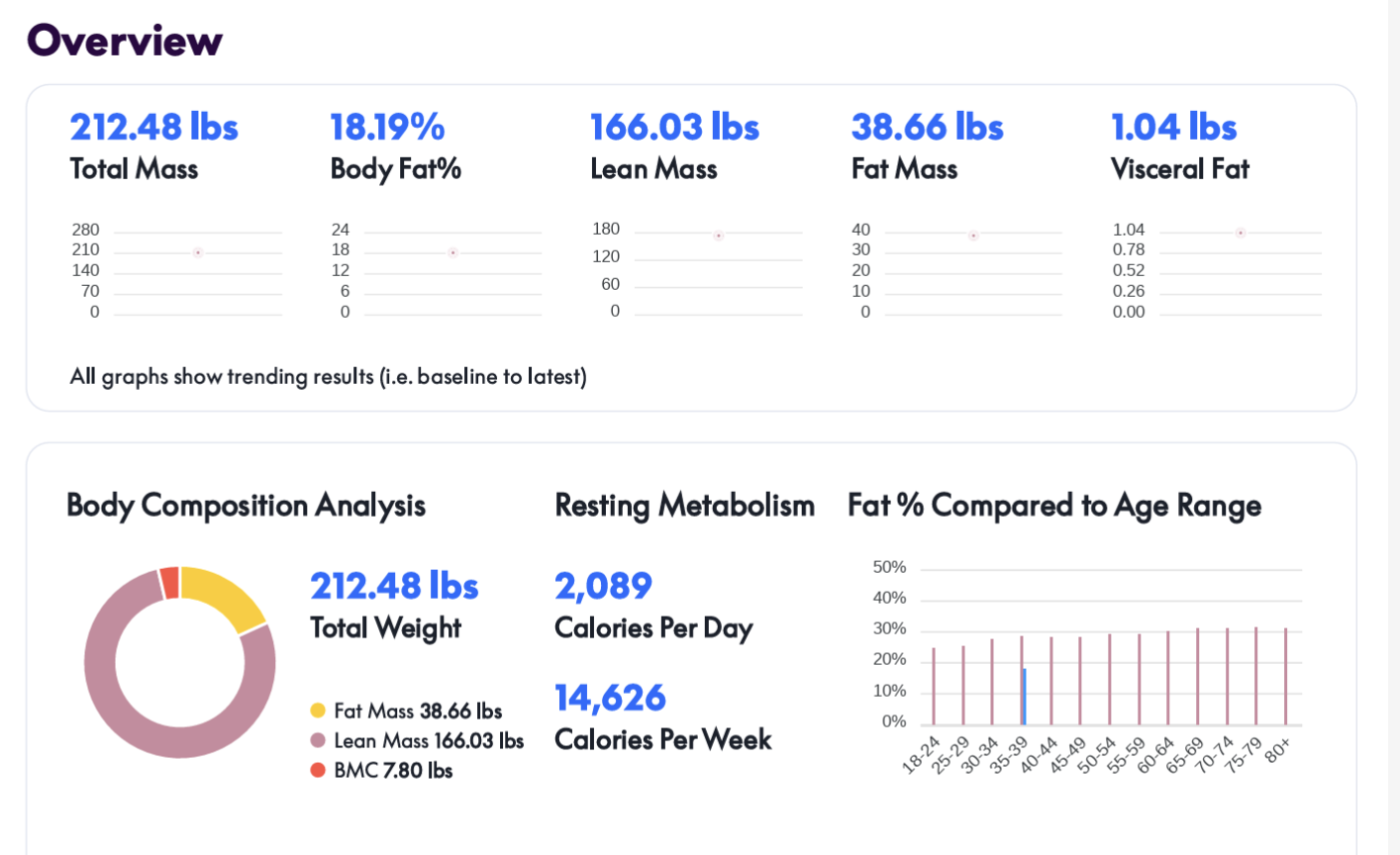
Given that BMI has such significant limitations, I highly recommend using body composition to asses your overall health.
You can read more about body composition in this article, “What is body composition?”
Below is a sample body composition result, offering a breakdown of:
Total Mass
Body Fat %
Lean Mass
Fat Mass
Visceral Fat
If you have any additional questions abou Body Mass Index (BMI), its limitations, or how to calculate BMI, please do not hesitate to reach out to zach@embodi3sports.com.
