
What Is Body Composition?
A few weeks ago, I was having a conversation with a client about her body weight and the diet she recently started. She said that she is on a mission to get skinny again, and has noticed that she is about 10 lbs above what she used to consider heavy.
As her trainer, I am helping her to accomplish two things:
Return to surfing and skiing after an ACL injury (without surgery)
Become as happy, confident, and free in her body as she can possibly be.
After hearing her talk about her goals for weight loss, I wanted to help make sure she understood that adding or maintaining weight is not always a bad thing.
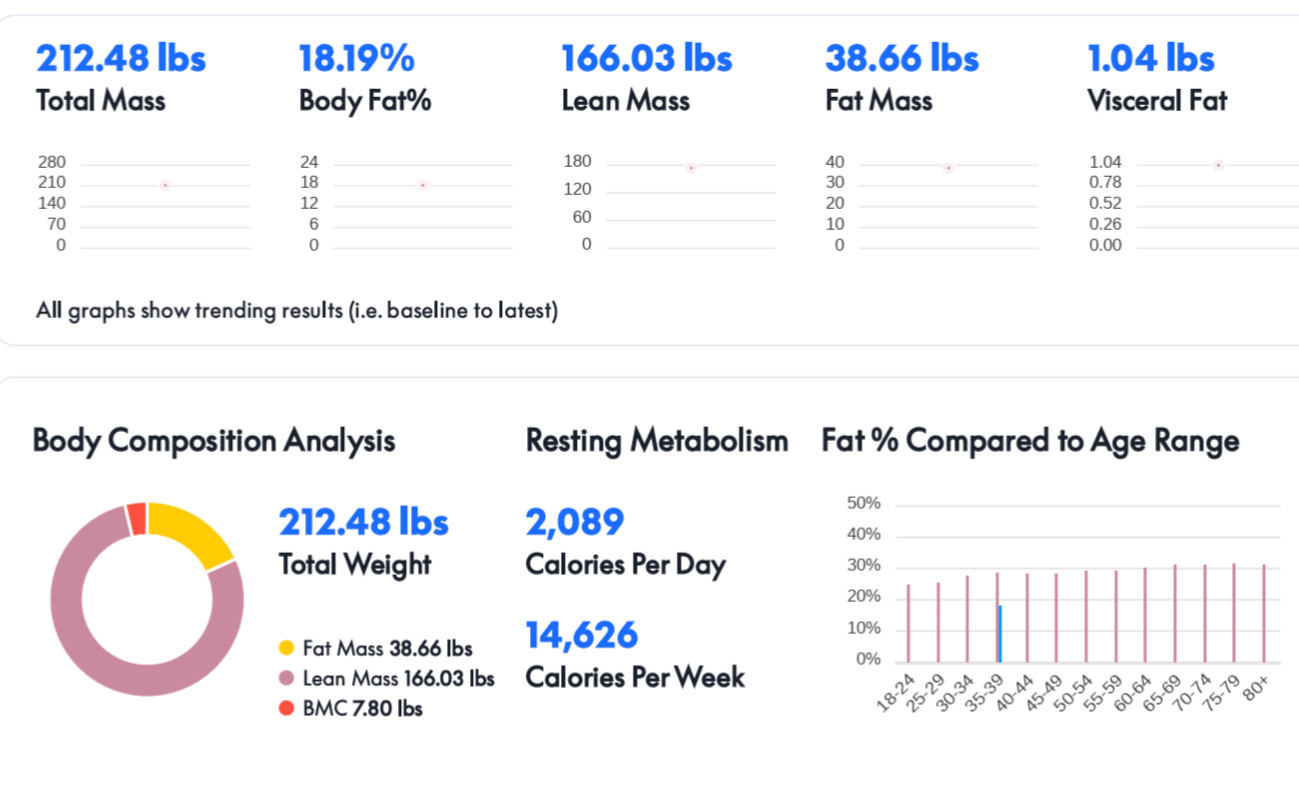
Body Composition Data
When we are working to build muscle and strength, the goal is actually to:
1. Subtract weight (in fat).
BUT ALSO
2. Add weight (in muscle).
Sometimes, the addition of muscle weight and addition of fat weight cancel each other out.
For instance, if we work together to add 3 pounds of muscle and lose 5 pounds of fat, the net weight loss is 2 pounds.
Psychologically, losing 2 pounds is a big win!
BUT how big of a win would it be if you knew you not only lost 2 lbs, but..
Lost FIVE pounds of fat
Gained THREE pounds of tissue that is one of the biggest contributors to your overall health and longevity.. And looking good too!
That is a big, big win. One worth celebrating and giving a big LET’S GOOO!
So.. how do we know?
Enter the phrase “body composition.”
Why Is Body Composition Important?
Body composition is a very important term for anyone who is starting their weight loss, muscle building, or improving overall healthy journey.
As a general rule of thumb, the more muscle we have and less fat we have (within recommended ranges), the healthier we will be.
Additionally, studies show that adults with greater muscle mass consistently live longer.
This combination of more muscle and less fat also gives us the added bonus of feeling really strong and confident in our bodies too (and who doesn’t want that :-) )
Therefore, body composition is a much more important metric to understand than total body weight.
(If you’re interested in a more detailed article on the “Muscle-Longevity” connection, I highly recommend this article on Healthspan.)
What is body composition?
Body composition gives us a breakdown of our weight between:
Total body weight
Lean body mass
Fat weight
Where lean body mass is all weight in your body that is NOT fat.
Body Composition Example
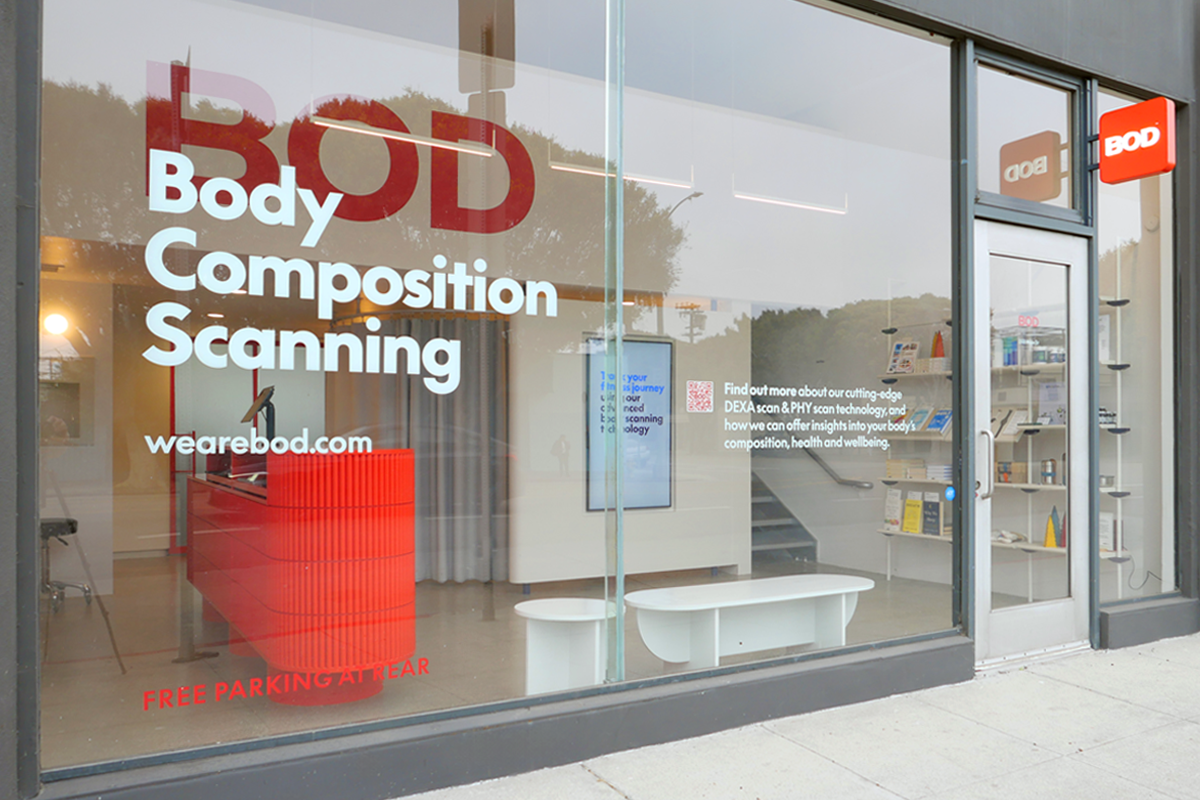
For instance, in a body fat scan I had done at “BOD” in Los Angeles a few months ago offered me the following information:
Total Mass: 212.48 lbs
Body fat: 18.19%
Lean Mass: 166.03 lbs
Fat Mass: 38.66 lbs
Visceral Fat: 1.04 lbs
With these numbers in hand, I can now better understand any weight fluctuations as it relates to my health, training program, and nutrition going forward.
My expectation is that I will both build muscle and lose body fat
Reducing my body fat %
Increasing lean mass
Decreasing fat mass
My net weight loss or gain (the number we would normally see on a scale) is not so important to me, as long as I know I am hitting the goals above.
I hope after reading this article that you feel like you have a better understanding to answering the question, “What is body composition?”
How To Measure Body Composition
Future articles will focus on different ways to measure body composition and the accuracy of each method.
For now, if you’d like to get started, I encourage you to locate a DEXA scan close by (considered most accurate) or, for daily tracking, purchase a Tanita RD-545 Innerscan Pro.
With regards to the DEXA scan, confirm that it will be a full body scan and that you will be provided body composition data (I made the mistake of not confirming for my first DEXA scan, and did not realize body composition was not a part of the scan).
As it relates to the body composition scales, many are not very accurate.
I consider this Tanita scale to be superior to others on the market for several reasons, which I will cover in future articles.
If you have additional questions, please feel free to shoot me an email at zach@embodi3sports.com - I am here to serve.
