
8 Considerations For Playing Sports Through Pain Or Injury
This Sunday was the opening day for baseball season in my 30 and over Harford County men’s league. It was a chilly, shady, windy, 44 degree morning - there’s no better way to start baseball season in the northeast!
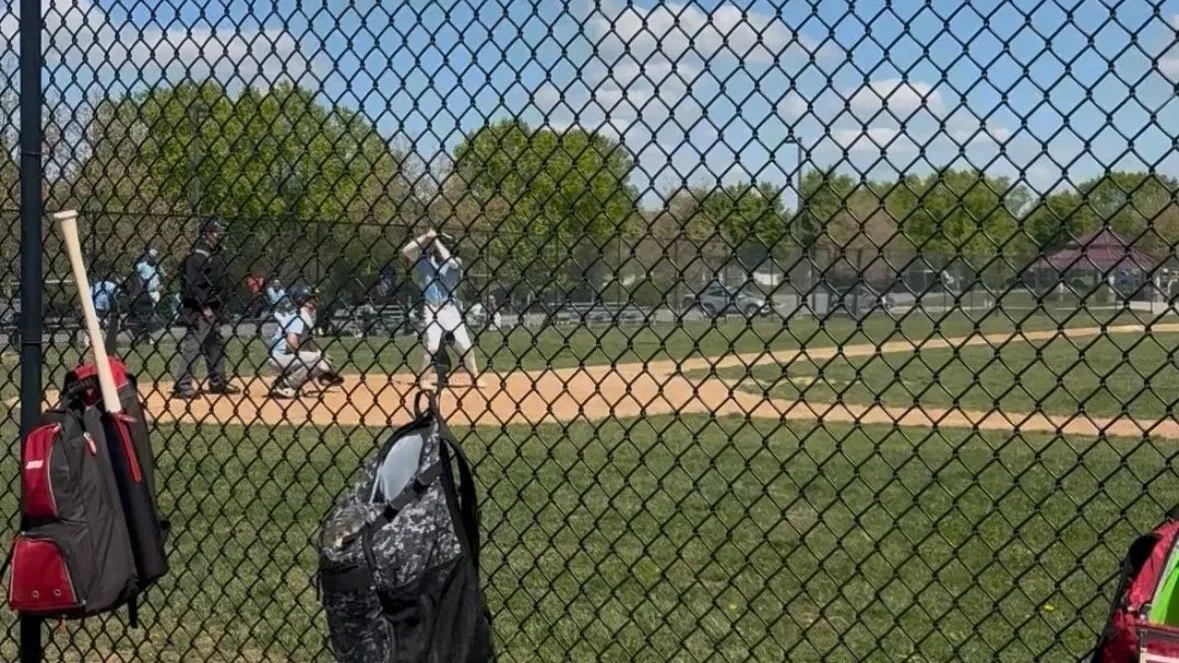
Thanks to a combination of lifting weights, cardio work, sauna, and Embodi³ Flow training, my body was feeling the best it has in a long time heading into the game.
In my first at bat, I hit a ground ball deep in the hole at second base and took off sprinting down the line. As I’m approaching first base, I realize the first baseman has his foot covering a decent bit of a bag (he isn’t supposed to do that!) and a collision is imminent.
I reach for the bag and trip over him, tumbling to the ground. My shoulder hits the ground with an immediate spike in pain, but I’m back on my feet in no time.
“We’re good to go, nothing hurt,” I think to myself.
Two or three pitches pass before, and I take off to steal second base.
“Whatttt?” I think in my head. “My shoulder does not want to move!”
“Crap.. this is going to be worse than I thought.”
After stealing second, and taking third on an errant throw, I scored on a pass ball.
The shoulder is throbbing a little more now, and after dapping up teammates, I immediately start to go into a light range of motion work in different directions, trying to keep the shoulder loose.
I ended up playing the rest of the game, and while I typically wouldn’t recommend playing through significant amounts of pain, the game did have me reflecting on a few things to consider if you’re in pain and want to continue to play.
First and foremost, make sure to consult with your doctor, physical therapist, or athletic trainer before making the decision to play through pain or injury.
This article is not medical advice and is only meant to share my reflections based on the past 8 years working with athletes who are navigating pain and injuries.
Here are 8 considerations for playing sports through pain or injury:
If you are interested in learning more about Embodi³and The Embodi Method, click the button below to reserve a time on Zach’s calendar:
1) Are you in danger of making your injury worse?
I typically recommend that athletes do not play if they are experiencing pain greater than a 2 out of 10; however, this is all a risk-reward equation.
The better you can understand your risks, the better you can make a decision on the reward.
In my case, I was thinking that this injury was a “blunt force” type of injury. While I wasn’t positive, it didn’t feel like there was a muscle injury, ligament issue, or broken bone that could be made worse by continuing to play.
If you can, consult with your athletic trainer or physical therapist to understand what your injury might be and if it can be made worse to best understand your risks.
2) Is your performance helping or hurting the team?
There are times when I’m watching athletes play through injuries thinking, “C’mon… you’re actually hurting your team by being out there right now.”
Yes, we all love to see an athlete tough it out. But if the man or woman behind you can perform at a higher level because they’re healthy, do what you can to set your team up for success for the victory.
In my case, I was on the fence about this. I play center field and my legs were still fresh - I could likely still get to balls that almost no one else on the team could.
At the plate, I could swing, but it did feel like my mechanics were slightly altered by the shoulder. I hit a strong line drive to center field in my last at bat, so I think I probably was still a “plus” for the team in my ability to play.
3) Is it possible to control your intensity, stress, and load in your sport?
In baseball, it is a little easier than most sports to go less than 100% if your body isn’t up for it.
As a member of a 30 and older baseball league, there are several players on our team who choose not to run 100%, especially in 44 degree weather, because they would like to reduce the risk for pulling a muscle.
They were still effective players for the team, and one ended up scoring two runs today.. While being chided by all of his teammates for how slowly he ran from base to base!
Other sports do not allow for this - in higher pace sports like soccer, lacrosse, basketball, and football, if you go less than 100%, you could set yourself up for further greater injury.
4) Can you be aware enough to alter movement mechanics a bit to make up for the injury?
If you can really dial into what you’re feeling in your body, as I train through the Embodi Method, and understand the mechanics required for your sport, you may be able to work around the injury a little bit.
During one of my at bats today, I could feel that I was slow to the fast ball, because my front shoulder was not willing to fire the way I’m used to.
I made a quick adjustment on the next pitch to use more “top hand” on my swing, before hitting the strong line drive to center field I mentioned earlier.
Stay aware, stay in your body, and use what it’s telling you to optimize your performance.
5) What can you do to keep moving and keep warm?
Your ability to play at a high level through pain or injury may depend on what you can do to keep moving and stay warm, especially if the injury is acute (it just happened).
When I hurt my shoulder, I immediately recognized that stiffness, pain, and inflammation were going to build. My body was in a “high threat” state, and it was going to do everything possible to shutdown the shoulder.
Between innings, and while in the outfield, I utliized Embodi³ Flow training, keeping my arm moving in different ranges of motion - trying not to push into any pain levels greater than a 2 out of 10.
I recommend using the pain as your indicator for which ranges of motion to move into. Do not push into excessive pain (>2/10), but keep moving so that your brain doesn’t go into a complete shutdown state for the injury site.
Additionally, consider working through ranges of motion more explosively, assuming pain is not spiking >2/10. You want to see if your body is able to handle the explosive movements that are required for your sport before its required on the field.
6) Do you feel muscles starting to deactivate?
As you continue to play, you may find that muscles are starting to feel like they are “deactivating.”
I experienced this about a year ago during a pick up basketball game. I tweaked my knee and thought it would be something I could easily play through.
After a few minutes, I felt my muscles around the knee starting to shut down, no longer supporting the knee the way they needed to.
This was a clear indicator to me that I should not continue to keep playing. Basketball is a high intensity sport with a lot of hard cutting involved - I believe my risk for injury was much greater with muscles not firing properly.
7) Don’t underestimate the power of the mind.
Your mind can be your greatest friend or your greatest foe when it comes to playing through injury. Sometimes, it is a matter of will power.
Again, keep this in the context of the full article - this should always be a decision made with your medical advisors.
If the the decision has been made to play, stay positive in your mindset. Understand that pain is likely to occur at certain moments and be prepared for it, but do not let it limit you.
8) Keep your DC device (in my case the DX500 by NerveOTX) close during gameplay!
If you have the time to throw pads on the injured area and do a little bit of light range of motion work during the game, this may help to keep the muscles from stiffening around the injury.
It was a little tricky for me to use my DX500 between at bats and innings in the field, but I did find a quick moment to use the device. Combining your DC device with active range of motion exercise can almost always enhance the result beyond what exercise alone will provide.
There are two remaining slots available for 1 on 1 Embodi³ training for May 2026 - if you are looking to recover faster or extend your ability to move like an athlete for as long as possible, use the button below to reserve a call on my calendar.
30 Hours Post-Injury Update:
As I finish this article, I am a little over 30 hours removed from injury.
After the game, I immediately went to work with my DX500 and shoulder recovery protocols.
While most injuries tend to get a little worse over the first 24 hours, due to increasing pain and inflammation, I would say my shoulder is feeling 50% better than yesterday.
There’s still work to do, but I’m very encouraged by the early progress.
No matter how many times I experience it - guiding my clients or working on myself, The Embodi Method never ceases to amaze me.
I am grateful and humbled to be able to share it with others who are seeking to be the best they can be, athletically and in life.
If any questions come up regarding this article or The Embodi Method in general, please do not hesitate to reach out to me directly at zach@embodi3sports.com.
